

Whether you want to complete or compete successfully, executing a triathlon requires discipline across three disciplines.
Depending on your goals, you'll need to bike fast enough to place in your age group or overall, or make a time cut, but you don't want to overcook your legs for the run.
Why Trust Us?
ACTIVE.com's editorial team relies on the knowledge and experience of fitness and wellness experts, including competitive athletes, coaches, physical therapists, nutritionists, and certified trainers. This helps us ensure that the products we feature are of the highest standard. Collectively, the team has spent countless hours researching equipment, gear, and recovery tools to create the most accurate, authentic content for our readers. Customer satisfaction is also a key part of our review process, which is why we only feature highly rated products.
What can you do to ensure your legs will get you to the finish chute?
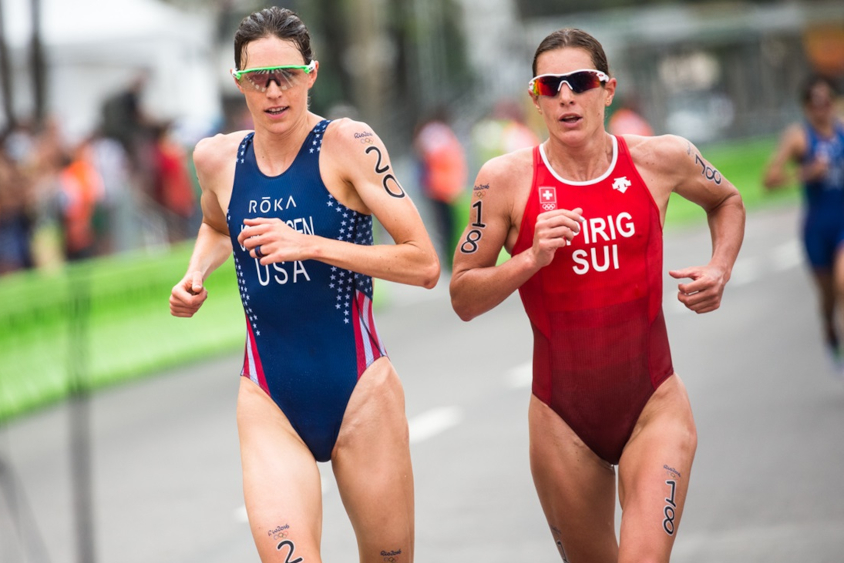
Gwen Jorgensen and Nicola Spirig running. Credit: Creative Commons
Proper Triathlon Nutrition and Hydration
Nutrition might be triathlon's fourth discipline. If you nail your nutrition, you won't feel too tired to finish, and you'll be able to cross the finish line feeling like you left it all out there. But if you don't get your triathlon fueling right, you could suffer cramping, loss of power, delayed decision-making, and severe fatigue that prevents you from finishing.
Eating and drinking on the bike is easiest, compared to swimming or running, so this is where you'll want to focus on keeping your energy stores topped off. If you practice your nutrition strategy while you're on the bike and when out for your training runs, you'll be dialed in for race day.
You'll want to train for eating and drinking on the bike by consuming enough electrolytes and carbs for your size, weight, and body type. Before race day, you'll want to know how much to drink while riding (and in what kind of weather) and how many grams of carbohydrate to ingest, without overdoing it before getting to the bike-in transition zone.
And the same goes for staying hydrated with an electrolyte and/or carb solution.
Keep in mind the longer the event, the more important hydration and nutrition become for being a successful triathlete. A sports nutritionist can help you dial in your specific needs.
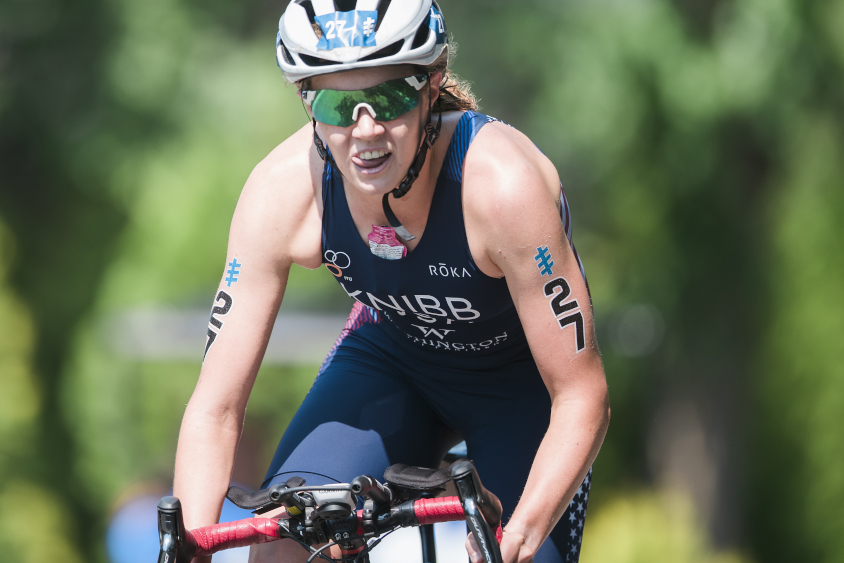
Pro triathlete Taylor Knibb is a beast on the bike, but she paces it well knowing she'll have to run after pedaling. Credit: Creative Commons
Pacing on the Bike for a Better Run
Another sure-fire way to finish strong on the run is not overcooking your legs on the bike.
A power meter and a heart rate monitor are invaluable training and racing tools for guiding how hard to go on the bike. A bike computer that displays your effort (power, heart rate, distance, time, speed, etc.) is a must-have.
If you have the tools to guide your training, you can practice pacing to ensure your variability index (the ratio of Normalized Power to Average Power) is as close to 1.00 as you can get it. Sustaining watts while seeing a gradual elevation in heart rate (minimal decoupling and low cardiac drift) is a good indicator of fitness and steady state cycling execution. You'll also want to keep an eye on your bike cadence. Ideally, spin between 80 and 90rpm. Too slow, and you'll induce fatigue; too fast, and your power may be sub-optimal.
If you use a simulation environment like Rouvy or Zwift, do so without using erg mode to learn what power output feels like. You'll want to pay attention to your watts and heart rate.
You'll want to avoid going out too hard, and also limit surges on the bike. When climbing, the longer you can stay seated, the more efficient your cycling will be, leaving you in a better position for the run.
Quick Tip
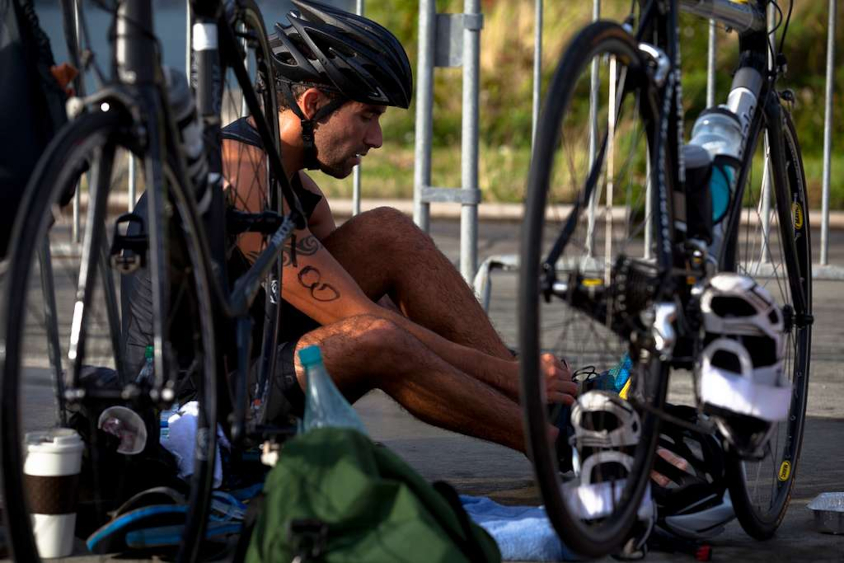
If you can stay calm and relaxed in transition, you won't spike your heart rate and will likely have a better run. Credit: Creative Commons
Practice Transitions for Faster Runs
Another great way to improve your triathlon run is to practice transitions. Practicing your transition will give you the experience of moving from the bike to the run and all the skills necessary to get onto the run efficiently.
You'll want to practice efficiently getting into your running shoes, grabbing any nutrition and hydration you'll want for the run, and then moving towards the run-out exit without stumbling, cramping, or going out too fast.
If you're too nervous after the bike segment, you may be more likely to go too hard too early.
One way to practice triathlon transitions is by doing BRICK workouts in your training. You don't have to follow every bike ride with a run, but doing specific workouts targeting the bike-transition-run, as well as the increased fueling needs, will greatly benefit you. USA Triathlon suggests that if you're running three times per week, one of the sessions should be a bike-run workout.
A simple BRICK workout that's highly effective for Olympic- and half-distance triathletes is after doing a two-hour ride below threshold, do a 20-minute run, employing a negative split strategy, finishing the final 10 minutes or last mile at target pace. A BRICK workout that's effective for shorter events may be doing two 20-minute threshold efforts on the bike, at or just below race pace, followed by running one mile at race pace.
If your race distance focus is sprint triathlon and/or Olympic distance races, you'll want to train intensity when running off the bike. If you're doing longer events, like 70.3 and 140.6/full-distance events, you'll want to practice not going too hard, too soon. You'll want to avoid going too hard and/or for too long in training, as this requires appropriate rest and recovery, which could impact your training in the following days.
BRICKs are also excellent opportunities to practice your nutrition strategy!
You don't have to follow every bike ride with a run, but doing specific workouts targeting the bike-transition-run will greatly benefit you
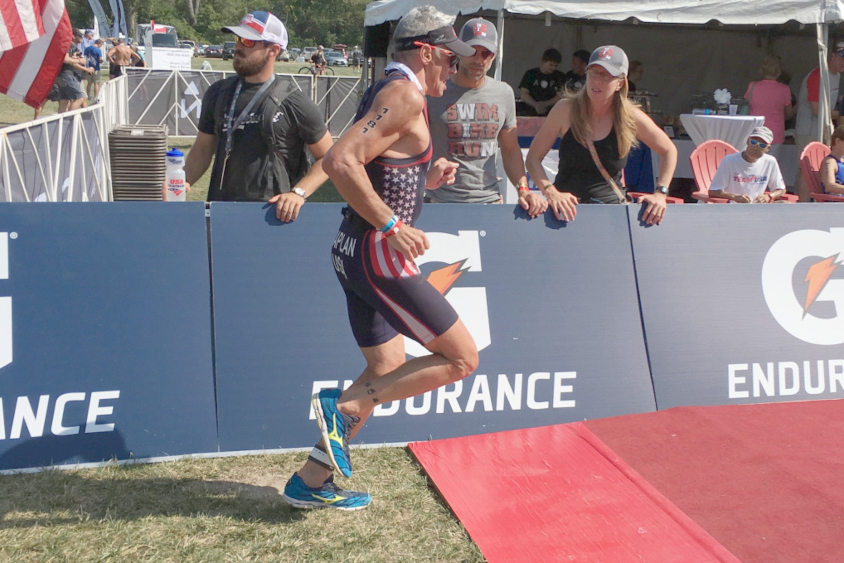
Practice pacing the run segment so you don't go out too fast. Credit: Greg Kaplan
Run Pacing Practice
Wearable fitness devices are invaluable tools for training and pacing when racing. But they are only tools to guide you.
Triathlon coaches recommend track workouts for speed, hill workouts for power, and base distance and tempo runs for fitness and physical adaptation. You'll want to understand your pacing while doing structured run workouts geared for triathlon, which means running off the bike.
Once you've got the basics of running off the bike (after swimming!), which feels quite different than doing an open run, a wearable device can help guide your pacing. This is where using technology is a great advantage. Pay attention not only to your minutes per mile/kilometer, but also your heart rate. If your heart rate spikes too soon, you'll have a hard time getting it back under control and will fatigue too early.
Keeping your heart rate under control through proper pacing is especially important for long-course triathletes, who run for several hours.
Smiling on the Run
One sure way to run easier and faster off the bike is to smile. This simple, low-energy-cost muscle expression is proven to relax athletes and serves as a reminder that you're doing this hard work and sometimes painful racing as a fun exploit.
Top Triathlon Tips for Faster Running Off the Bike
- Eat and drink on the bike
- Don't ride too hard
- Stay relaxed in transition
- Pay attention to your pace out of T2
- Smile!
Frequently Asked Questions
Why do my legs feel so heavy when I start running off the bike?
This is largely a pacing issue. Riding too hard, surging on climbs, or letting your heart rate spike leaves little in reserve for the run. Practicing steady, controlled effort on the bike, along with regular BRICK workouts, trains your body to make the transition more smoothly.
What is a BRICK workout and why does it help?
A BRICK workout combines a bike ride immediately followed by a run, simulating the bike-to-run transition you'll face on race day. It trains both your legs and your fueling strategy for that specific transition, which is difficult to replicate any other way.
What is a good variability index for triathlon bike pacing?
Aim for a variability index, the ratio of Normalized Power to Average Power, as close to 1.00 as possible. A number close to 1.00 indicates steady, even pacing, which typically sets up a stronger run than a ride full of surges and coasting.
What cadence should I ride at to set up a better run?
Most triathletes do well spinning between 80 and 90 rpm. Cadence that's too slow tends to increase fatigue, while cadence that's too fast can make your power output less efficient. Finding your sweet spot within that range helps preserve your legs for the run.
Does smiling actually make you run faster?
Research suggests smiling can genuinely help relax athletes during effort, which may translate to feeling smoother and less strained on the run. It's a low-cost mental tool that also serves as a reminder that racing, even when it's hard, is still meant to be enjoyed.