

Learning how to prepare for your first sprint triathlon can feel overwhelming. Three sports, unfamiliar gear, a race format you've never experienced. If you're feeling a little confused right now, that's completely normal, and you're in exactly the right place.
I've also stood at the edge of a lake in a wetsuit, wondering what I'd gotten myself into, and fumbled through a transition area. At the same time, everyone around me seemed to know exactly what they were doing and crossed a finish line for the first time with legs that felt like wet cement.
I get it. And I've spent years helping thousands of beginners do exactly what you're about to do: train smart, show up prepared, and complete your first sprint tri feeling genuinely proud.
Why Trust Us?
ACTIVE.com's editorial team relies on the knowledge and experience of fitness and wellness experts, including competitive athletes, coaches, physical therapists, nutritionists, and certified trainers. This helps us ensure that the products we feature are of the highest standard. Collectively, the team has spent countless hours researching equipment, gear, and recovery tools to create the most accurate, authentic content for our readers. Customer satisfaction is also a key part of our review process, which is why we only feature highly rated products.
What Is a Sprint Triathlon?
A sprint triathlon is a multi-sport endurance race made up of a swim, a bike leg, and a run—completed back to back in that order. The standard distances are a 750-meter swim, a 20-kilometer bike ride, and a 5-kilometer run, though some races vary slightly. It's the shortest standard distance in triathlon, which makes it the ideal starting point for a beginner triathlete.
How Long Do You Need to Train?
Most beginners can prepare for a sprint triathlon in 8 to 12 weeks, depending on their current fitness base. An 8-week sprint triathlon training plan works well if you're already active across at least one or two endurance sports and can swim a few hundred meters, ride for 45 minutes, and run a 5K without issue. A 12-week sprint triathlon training plan is the better choice if you're newer to endurance sport, less comfortable in the water, or want more time to build confidence gradually.
If you're in any doubt, choose 12 weeks. More time means more practice, more confidence, and a better race day experience.
Consistency matters far more than volume. A typical beginner training week looks like this:
- Monday: Rest
- Tuesday: Swim 30–40 minutes of drills and easy laps
- Wednesday: Run 25–35 minutes at easy effort
- Thursday: Bike 45 minutes, including short hard intervals
- Friday: Swim 30–40 minutes, open water skill focus
- Saturday: Long bike ride of 60–75 minutes, followed immediately by a 10–20 minute brick workout run
- Sunday: Rest or easy hike
Sprint Triathlon Training for Beginners: The Right Foundation
The biggest mistake beginners make is doing too much too soon. The right foundation is about building the body's ability to handle consistent sprint triathlon training week after week—not going long or going hard right away.
Endurance comes first. Speed and strength come later. Keep all workouts at an easy, conversational effort in the early weeks, increase your longest session by no more than 10% per week, and take a lighter rest week every third week at around 60% of your normal load. Seven or more hours of sleep per night isn't optional—it's when the adaptation actually happens.
For each discipline, two workouts per week is all you need: one longer, easier endurance session and one shorter, harder effort session. That combination, done consistently, will get you to the finish line feeling strong.
How to Train for the Sprint Triathlon Swim
The swim is the most intimidating leg for most beginners. That's understandable—it's first, it's in open water, and most people haven't spent much time there. But success in the swim is not about fitness. It's about skills and staying calm. A confident swimmer who panics in open water will have a terrible swim. A less-fit swimmer who has practiced the right skills will have a perfectly fine one.
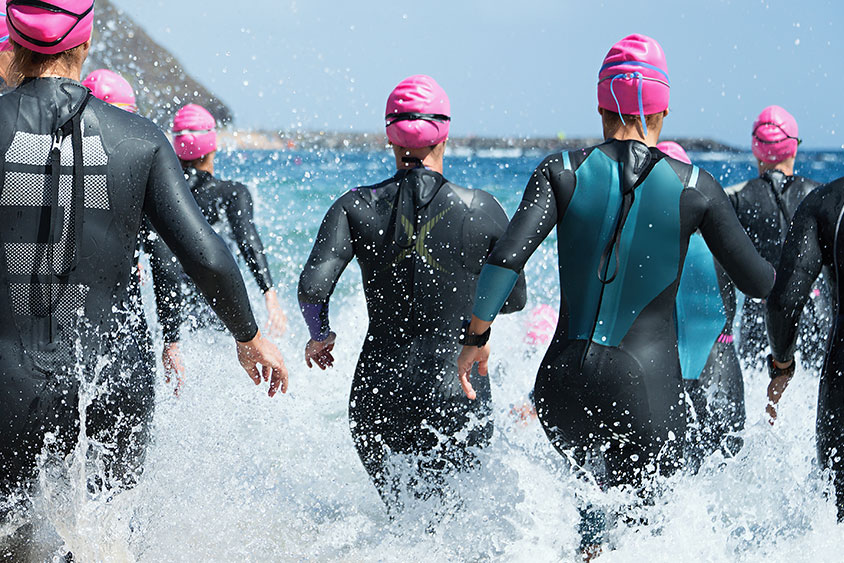
Open water is a fundamentally different environment from the pool. There's no black line to follow, no walls to push off, no lane lines to dampen chop. The water is often murky. Other swimmers will bump into you at race starts. If you're wearing a wetsuit, it changes how your body floats and slightly restricts shoulder movement. Practice all of this in training before race day.
Three foundational skills cover most of what you need in the water:
- Breathing: Exhale continuously through your nose or mouth while your face is in the water. When you turn to breathe, take a small, controlled sip of air, not a gasp. Turn your head, don't lift it, with one goggle staying in the water. Practice this until it's completely automatic.
- Body position: A horizontal body line, back of the head, hips, and heels near the surface, creates the least drag. The most common fault is lifting the head to breathe, which drives the legs down like a seesaw. Keep your core engaged and your kick narrow and gentle.
- Sighting: Every 6–10 strokes, lift just your eyes (not your full head) forward to spot a buoy or landmark, then immediately rotate to breathe as normal. GPS data shows that triathletes who don't sight regularly add 10–20% to their actual swim distance. Practice this in the pool so it's automatic in open water.
How to Train for the Sprint Triathlon Bike Course
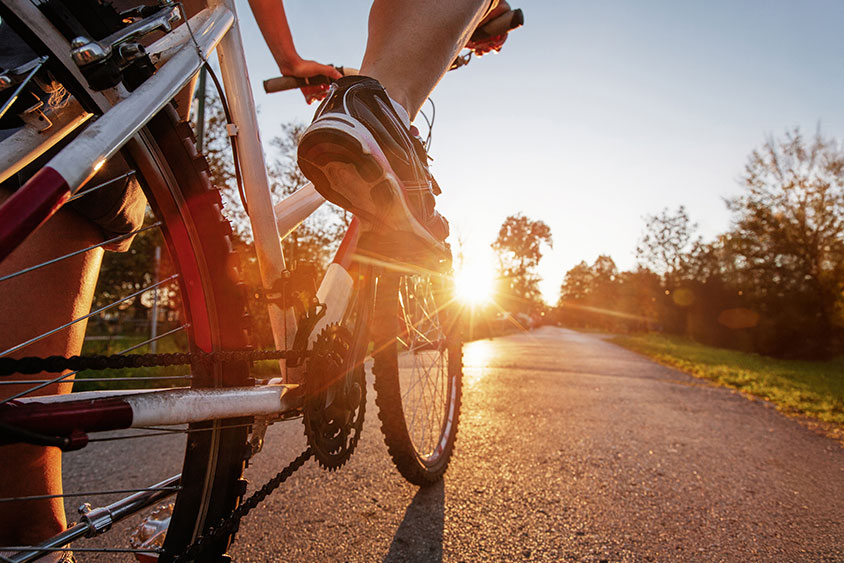
Do two bike ride sessions per week: one longer, easy endurance ride and one interval session. For the long ride, increase the duration by no more than 10% per week and keep the effort comfortable and conversational. Focus on a smooth pedal stroke and aim for a cadence of 80–90 RPM rather than grinding a heavy gear slowly; a higher cadence preserves your legs for the run.
For the interval session, one simple workout covers everything a beginner needs:
- Warm-up: 10 minutes of easy spinning
- Main set: 5 x 2-minute efforts at a comfortably hard pace, with 2 minutes of easy recovery spinning between each
- Cool-down: 5–10 minutes easy
That's 40–45 minutes total. Do it once a week, gradually increase the interval length, and you'll have the bike fitness you need.
How to Train for the Sprint Triathlon Run
The run comes last, so it's on tired legs. Even well-trained runners are surprised by how different running feels after a swim and a bike ride. The goal isn't to run fast, it's to run steadily and finish strong, walking as little as possible.
The most important run training you can do is the brick workout: a bike ride followed immediately by a short transition run. Get off the bike, rack it, and run immediately. The first few times you try this, your legs will feel like bricks, which is exactly the point. Your body needs to practice the muscle transition from pedaling to running, and that's a learnable skill. Do at least one brick workout per week in the final four to six weeks before your race.
For race-day pacing, remember that, despite the name, a sprint triathlon run is not a sprint. Use the first 500 meters to let your legs adjust, check in at the 1-kilometer mark, and hold a steady effort. Quick foot turnover and upright posture will carry you to the finish far better than trying to go fast early.
How to Master the Transition Area
Transitions are the fourth discipline of triathlon. A calm, organized transition-area experience can save several minutes on race day and, more importantly, means you leave each transition ready to perform in the next leg.
T1 (swim to bike): Exit the water and unzip your wetsuit while running to your rack. Find your spot using a pre-memorized landmark. Put on your helmet before you touch your bike—non-negotiable. Add sunglasses, grab your bike, and run to the mount line.
T2 (bike to run): Dismount before the line, run your bike to your rack, rack it, then remove your helmet. Swap shoes, clip on your race number belt, and go.
A few tips that make transitions smoother:
- Walk the transition area before the race, know your rack number, the swim exit, and the bike and run exits
- Pre-load your shoes with baby powder so wet feet slip in faster
- Lay a small towel at your spot to give your gear a defined home
- Staying calm, controlled, and deliberate is faster than panicked

Sprint Triathlon Nutrition
For a sprint triathlon, pre-race fueling matters far more than in-race fueling. The race typically takes 60–90 minutes for beginners, so you don't need much on the course, but anything you do use needs to be tested in training. Never try anything new on race day.
Eat a small, carbohydrate-based breakfast four hours before the race starts. Toast with nut butter, oatmeal, or whatever you've practiced works well. On the bike course, a few energy chews or sips of a sports drink every 20 minutes is plenty. On the run, water at aid stations is usually all you need. Keep it simple and familiar.
Gear You Actually Need
You don't need to spend thousands to race a sprint triathlon. Beginners regularly finish their first race on basic gear. Swim: Mirrored goggles that seal without leaking, a swimsuit or tri suit, and a wetsuit if your race permits one and the water is cold. Practice in the wetsuit before race day.
Bike: Any reliable bike that's been tuned and checked. A certified helmet is mandatory. A spare tube and CO2 inflator. If you're not already using clipless pedals, race in regular sneakers this time.
Run: Well-fitted running shoes that you've trained in. Don't race in new shoes. A race number belt makes the transition faster than pinning your number directly to your kit.
Your First Sprint Triathlon Race Day Plan
Race day is not the day for experimenting. The training is done. Your only job is calm execution.
The night before, lay out all your gear, eat a normal, familiar dinner, hydrate well with an electrolyte drink, and get to bed at a reasonable hour. Light sleep and some nerves are completely normal.
Race morning, wake up four hours before your start to eat breakfast, arrive at the venue 60–75 minutes early to set up your transition area and walk the course, do a short warm-up swim if you're able to get in the water, and get to the start with a few minutes to spare. Then execute each leg with one thing in mind:
- Swim: Start at the outside of your wave, find your breathing rhythm in the first 100 meters, and sight every 6–10 strokes
- T1: Helmet on before you touch your bike. Every time.
- Bike: Build to effort over the first 1–2 minutes and hold a steady pace
- T2: Rack, helmet off, shoes, go
- Run: Let your legs adjust in the first 500 meters before settling into your pace.
You're More Ready Than You Think
Training for your first sprint triathlon comes down to a handful of things done consistently: building endurance across all three sports, practicing your transitions until they're automatic, learning to pace yourself, and showing up week after week. It's not complicated. It's just consistent.
The sprint distance is genuinely achievable for most active adults with 8 to 12 weeks of focused preparation. You don't need elite fitness or expensive gear. You become a triathlete by doing exactly what you're doing right now.
Every age group triathlete who ever crossed a finish line was once exactly where you are. They could do it. You can too.