


Credit: Creative Commons
Dehydration is no joke, and it’s so easily avoidable.
Sweat loss greater than two percent of your body mass increases your rate of perceived exertion (RPE), decreases your VO2max, causes cognitive impairment, and affects thermoregulation. In more extreme circumstances, dehydration can lead to heat exhaustion, rhabdomyolysis, or even stroke.
Why Trust Us?
ACTIVE.com's editorial team relies on the knowledge and experience of fitness and wellness experts, including competitive athletes, coaches, physical therapists, nutritionists, and certified trainers. This helps us ensure that the products we feature are of the highest standard. Collectively, the team has spent countless hours researching equipment, gear, and recovery tools to create the most accurate, authentic content for our readers. Customer satisfaction is also a key part of our review process, which is why we only feature highly rated products.
In practical terms, this means that at the onset of dehydration while riding, you’ll feel like you’re working harder at a given power output, and you won’t be able to hit your top end of power (think standing to crest a climb). Your reaction times will be slower when trying to avoid road hazards and obstacles.
Fortunately, there’s a relatively easy solution: drink.
Make drinking on the bike easy
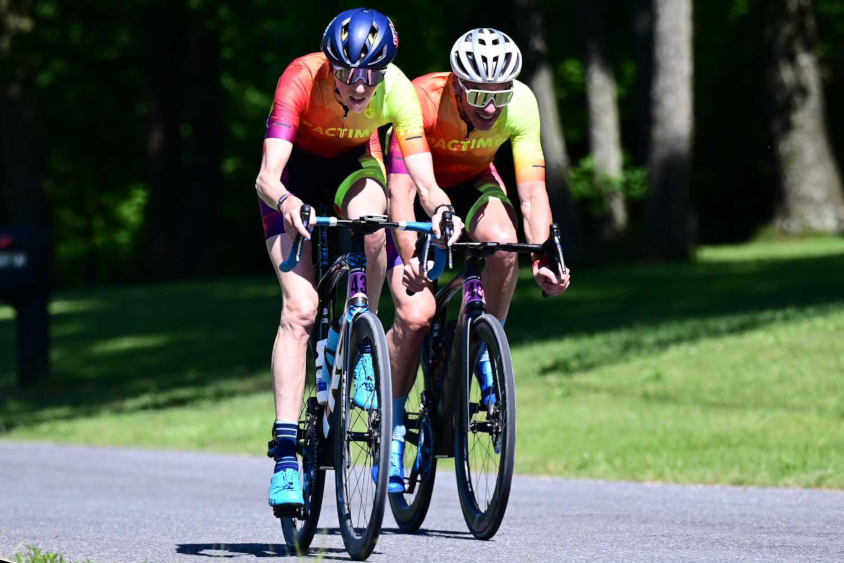
If you’re worried about depleting your hydration stores, you won’t drink as much as you need. The most effective way to increase the opportunity to drink on the bike is to carry more drinks.
If your bike only has one bottle cage, add another. If you already have two cages, you can use larger capacity bottles if your frame size allows. Some smaller bike frames may not accommodate one-liter or larger bottles. So a behind-the-saddle option might be the only way to increase hydration storage capacity.
Also, when riding in hotter climates, use an insulated bottle to keep your drinks colder for longer. Keep in mind that clear or dark-colored bottles will heat more easily than lighter colored, opaque options.
Credit: Greg Kaplan
Different Cyclists Have Different Hydration Needs
If you’re preparing for a specific event like a race, gran fondo, or charity ride, you can train to stay hydrated for it, while also staying hydrated while putting in saddle time.
Muscle retains more water than fat. Larger athletes, with more muscle, may be relatively more hydrated than slighter athletes. But muscle also generates more heat than fat—which means more sweating—so some effects may be slightly negated over the course of a longer ride.
This also means that men, with more muscle mass relative to their total body weight, naturally retain more water in their muscles than women. But men may not be as naturally adept at managing heat, so drinking more may be more necessary.
Overconsuming water means more frequent pee stops and could lead to hyponatremia — a spiraling electrolyte imbalance that can affect balance, cognitive function, cause stroke, or even death. So be mindful not to overdo it.
Drink to Thirst on Shorter Rides
For many cyclists, drinking to thirst during rides of an hour or less should be enough to stave off dehydration.
The general recommendation, based on the body of research, is to consume a 550ml bottle per hour, so one bottle should be enough for most riders. Of course, if you know you’re a heavy sweater, you’ll need to drink more. And the same goes when cycling on hot days.
But for many cyclists riding for more than an hour, one bottle of water is not enough, and drinking when only thirsty may be too little, too late.
Credit: Thomas Rachuj
Drink One Bottle or More per Hour for Longer Rides
When riding for several hours, research suggests downing one bottle or more per hour.
If you’re riding for more than a few hours, planning a route with stops to refill bottles is an excellent idea.
You can keep stomach sloshing to a minimum by taking small pulls from your bottle every 10-15 minutes. Accounting for humidity and altitude (drier climates, and those at elevation may require greater consumption) should also be considered.
There’s also a benefit to taking in carbohydrates to keep your energy stores full and prevent bonking, and to taking in electrolytes to help stave off cramping and prevent hyponatremia.
Since most carbohydrate sources need water for optimal absorption, this strategy will benefit your carb intake, too.
Credit: Greg Kaplan
Replenishing Electrolytes and Energy Stores
Skipping drinking has negative effects on performance, but so does overhydrating. So how can you balance these needs?
Preloading in the days leading up to a big event has merit, but why not make it a daily practice? You’ll become accustomed to having water and a hydration solution in your gut, and you won’t start your ride in a dehydrated state.
In addition to normal fluid intake, consider drinking a bottle (550ml) of electrolyte the night before an event as part of your pre-event dinner. When you have breakfast the morning of an event, you might also down another bottle, leaving enough time for your gut to absorb it and for you to hit the bathroom pre-ride.
The additional sodium will help you retain fluids, and the electrolytes may stave off cramping, boost blood plasma volume, reduce cardiovascular strain, and help keep you sharp.
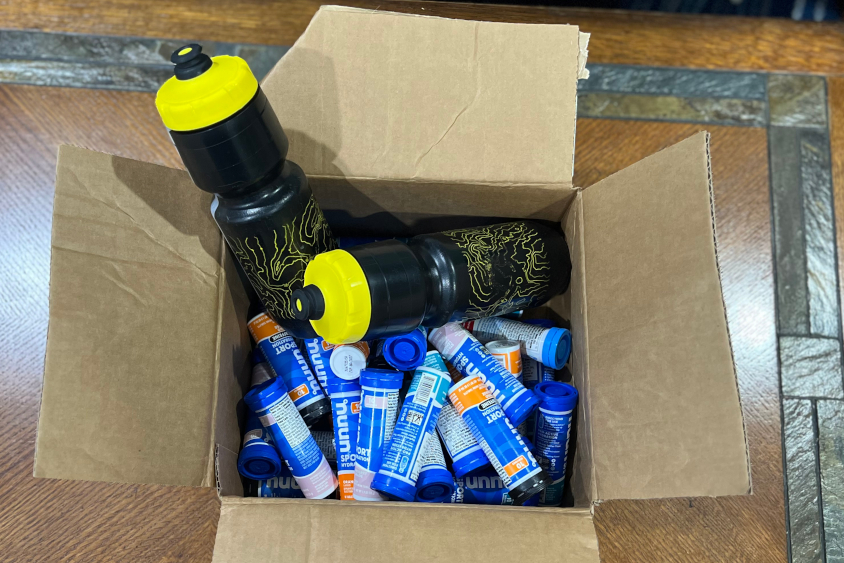
If you track your calorie intake separately from hydration, electrolyte solutions like Skratch, Nuun, Gu, and others offer premeasured options—one tab/sachet or scoop per bottle—that make mixing bottles easy. Just be sure to keep the carbs coming if you’re not drinking them.
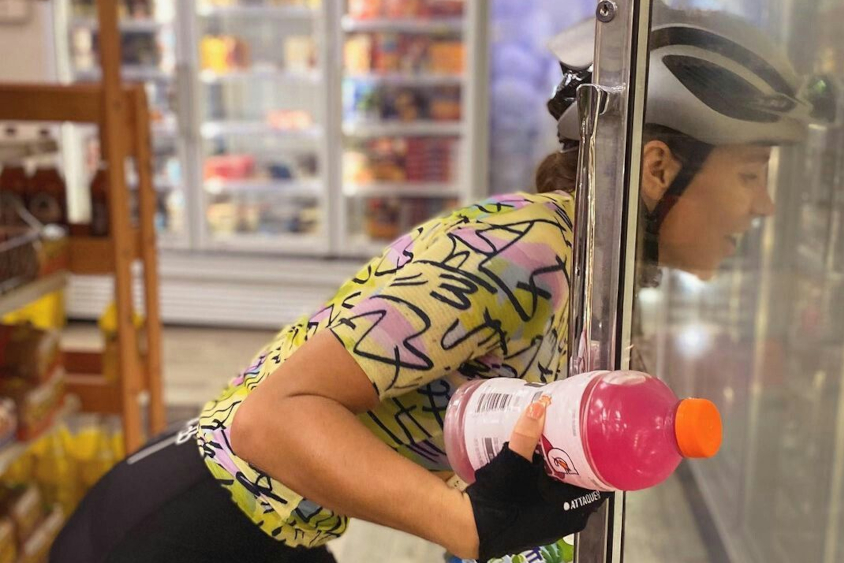
Keeping properly fueled with enough carbohydrates will greatly benefit your riding. Commercial sports drinks like Gatorade, Powerade, and BodyArmor lean heavily on carbs but also provide needed electrolyte replenishment.
While most cycling enthusiasts don’t need to take in 120g or more of carbs per hour like the pros, half to two-thirds of this rate—60g to 80g per hour—will benefit most serious cyclists going at a decent pace for several hours. If you’re going harder or are a bigger athlete, consider increasing this consumption rate. Store-bought carbohydrate and electrolyte replenishment is the easiest to manage, with premeasured options so you’ll know how much you’re consuming.
And if you’re riding indoors: The same advice and recommendations apply!
Stay Hydrated While Cycling Checklist
- Two or more bottle cages
- Large capacity (≥750ml) bottles
- Electrolyte drink; carbs are good, too!
- Preload the previous day for big events and/or hot weather.