

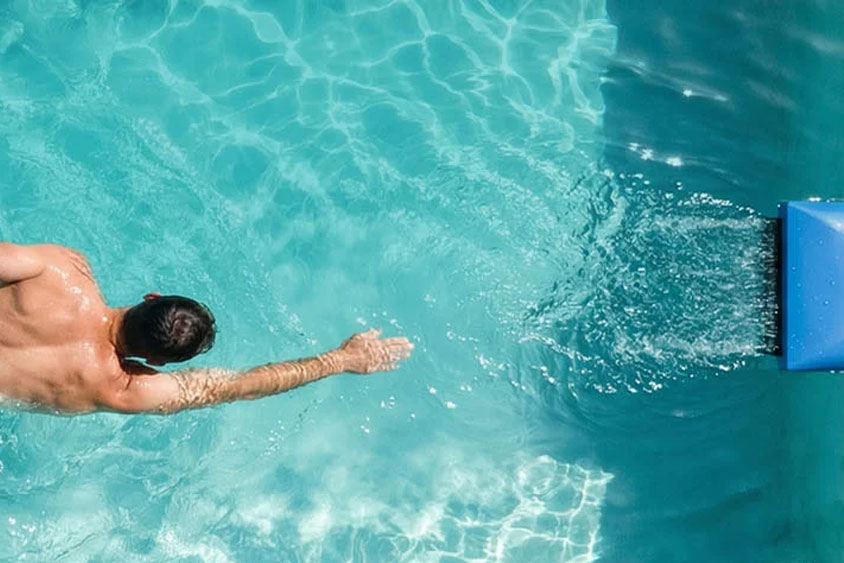
Quick answer: The Slipstream P3000 hangs on the wall of an existing pool and creates a wide, adjustable current for swimming in place. After 10 swims in one month, I found the current smooth enough for steady aerobic work and useful for open-water practice, though swimmers who prioritize precisely programmed intervals may want more control than the poolside speed dial currently provides.
Why Trust Us?
ACTIVE.com's editorial team relies on the knowledge and experience of fitness and wellness experts, including competitive athletes, coaches, physical therapists, nutritionists, and certified trainers. This helps us ensure that the products we feature are of the highest standard. Collectively, the team has spent countless hours researching equipment, gear, and recovery tools to create the most accurate, authentic content for our readers. Customer satisfaction is also a key part of our review process, which is why we only feature highly rated products.
Can You Really Swim in a 30-Foot Backyard Pool?
We built our pool three years ago for the family. Kids in floaties, friends over on a Saturday, somebody grilling. It's a resort pool, and it's good at that. It is not long enough to swim laps. I've tried a handful of times, and every attempt ended with me hanging on the edge after four or five lengths, feeling ridiculous.
So real swimming meant driving. Fifteen minutes each way, plus the wait for a lane. With two young kids, that's 90 minutes I don't have, and my swim volume has reflected it for years.
The Slipstream P3000 hangs on the wall of a pool you already own, connects to a rechargeable power supply on the deck, and moves up to 3,000 gallons of water per minute. There's no drilling, plumbing, or permanent electrical installation. You can review the manufacturer's current configuration and compatibility details on the official Slipstream P3000 product page.
I swam 10 times in a month with it. I haven't been that consistent in the water since training for my last triathlon, and that was years ago. Walk out the back door, swim, walk back in. I'm looking at race calendars again.
Walk out the back door, swim, walk back in. I'm looking at race calendars again.
How Easy Is the Slipstream P3000 to Set Up?
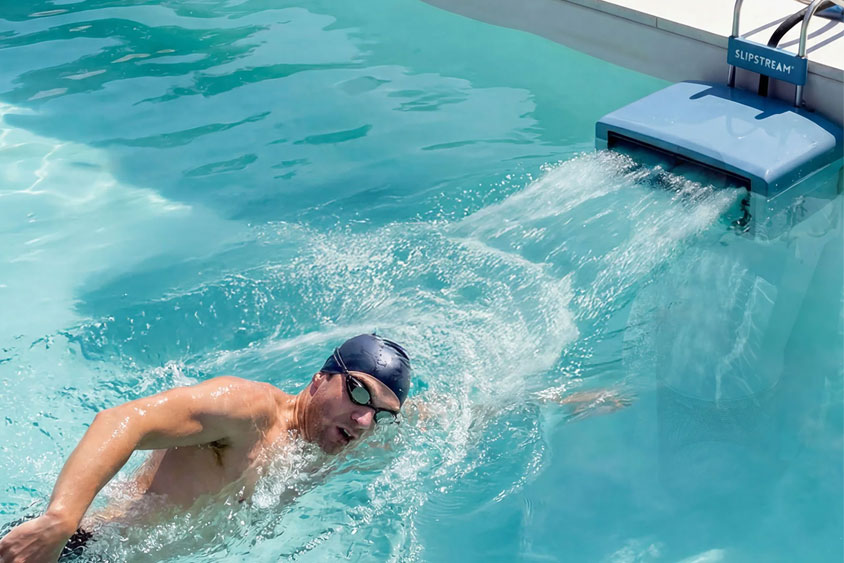
The P3000 arrived in three boxes with the swim machine largely assembled. I needed to install the battery and four screws, and Slipstream provides setup videos with additional tips. All in, I had it together in under 10 minutes.
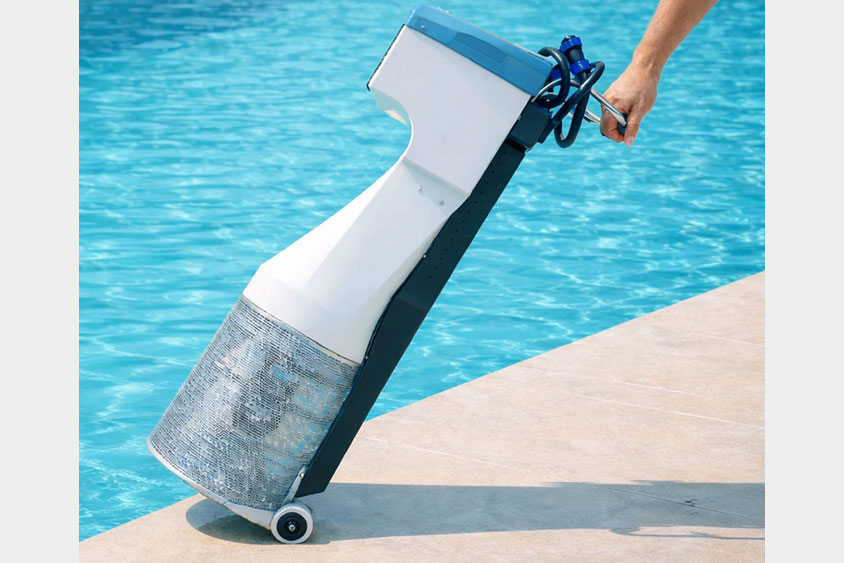
Getting it into the pool takes about a minute. The unit rolls on built-in wheels, hooks over the pool wall, and can be removed when the swim is over. That removable design avoids permanent modifications to the pool and helps limit the machine's continuous exposure to pool water.
Quick Tip
What Does Swimming Against the Current Feel Like?
Here's what I didn't expect: The current is wide, and that turns out to be the whole game.
I've swum against jets before, and it can feel like a fire hose aimed at your head. You spend the session micro-adjusting to remain inside a narrow column of water. Wander six inches, and you're either out of the current or getting hammered by its edge.
The Slipstream doesn't feel like that. The flow comes out broad and even across enough space that a little drifting doesn't matter. I stopped thinking about my position after the second swim. That's the highest compliment I can pay it because constantly managing your position is what makes many stationary swim setups feel like a gimmick. This felt more like swimming upstream in a river.
The water is smooth once you're a body length or two behind the unit. It passes through turning vanes and conditioning grilles before exiting, and I noticed the difference when breathing. I wasn't getting bubbles slapped into my face on every stroke.
Move close to the unit, and the water gets choppy fast. I started doing the final five minutes of each swim there on purpose because it felt like the turbulence at the start of an open-water race. If you're preparing for race-day conditions, pair that practice with ACTIVE's guide to training for open-water swimming.
How Well Does It Work for Training?
Steady aerobic swimming is where the P3000 shines. Set the dial, push off, and swim until the watch buzzes. There are no walls, no lane traffic, and no swimmer next to you doing butterfly. Battery life was never a factor in my 40-minute sessions. Slipstream rates the P3000 for up to 2.5 miles per charge.
Traditional interval sessions take more improvisation because the speed dial is on the power supply at the pool edge. You can let the current carry you farther back for a lower-effort segment, then swim closer to return to your working pace. That creates a usable change in effort, but it is not the same as following timed, preprogrammed speed changes.
An integrated app with customizable interval workouts would make the system more versatile. Until then, athletes can adapt structured sessions from ACTIVE's beginner triathlon swim plan or explore additional swimming workouts and modify the recovery segments for stationary swimming.
Quick Tip
What Should You Know Before Buying?
The swim unit weighs approximately 35 pounds and should be removed from the pool when it isn't in use. I viewed that removability as a benefit rather than a burden: Nothing is permanently built into the pool, and limiting continuous submersion can reduce cumulative exposure to pool water. The unit's wheels make moving it across the deck manageable.
The separate power supply weighs about 25 pounds, which is the heavier and more awkward part to carry. Slipstream offers a power-supply cart for owners who want an easier way to move it.
The included accessories also add practical value. The bundle I tested came with underwater streaming headphones, a snorkel, nose clip, centering marker, cleaning screen, cover, and protective deck mat. The headphones are especially useful for swimmers who want audio without loading files onto a separate MP3 player.
Who Should Buy the Slipstream P3000?
If you own a pool and the main reason you're not swimming is that the pool is too short, this product makes a compelling case. It may also suit triathletes building aerobic volume, coaches running private lessons, users doing aquatic exercise or rehabilitation, and families who want to turn the current into a backyard lazy river.
Skip it if your pool doesn't meet the depth or swim-space requirements, if you have convenient access to a good lap pool, or if you need every session to follow precise, automated pace changes.
Is the Slipstream P3000 Worth It?
The better comparison isn't a monthly lap-pool pass. It's the cost and disruption of creating a permanent swim lane at home. Slipstream requires no pool construction or hardwired electrical work, and the removable design means you're not permanently altering the pool. Check Slipstream's official website for current pricing, financing, warranty, and HSA or FSA eligibility details.
The swim itself is excellent. I expected a backyard gadget and ended up using it three times a week, which is more swimming than I've done in years. The current is broad and smooth enough that by the fourth session, I had stopped noticing the machine and started noticing my catch. That's the whole test for a product like this.
I would still like to see app-based, programmable workouts in a future update. Even without them, the P3000 solved the problem I actually had: It turned a family pool that was too short for laps into a place where I wanted to train.
Slipstream P3000 Specifications
| Spec | Detail |
|---|---|
| Flow | Up to approximately 3,000 gallons per minute |
| Top pace | 1:20 per 100 yards |
| Range | Up to 2.5 miles per charge |
| Battery | 24V 60Ah lithium-ion marine battery |
| Charge time | Approximately 10 to 12 hours with the included charger |
| Swim-unit weight | Approximately 35 pounds with built-in wheels |
| Power-supply weight | Approximately 25 pounds |
| Minimum depth | 35 inches |
| Minimum swim space | 11 feet behind the unit |
| Guarantee | 30-day satisfaction guarantee |
| Bundle | Cover, cleaning screen, underwater streaming headphones, snorkel, nose clip, centering marker, and protective mat |
Frequently Asked Questions
How big does my pool need to be for the Slipstream P3000?
Slipstream recommends at least 35 inches of water depth and approximately 11 feet of open water behind the unit. My 30-foot backyard pool was long enough to use it comfortably.
How long does the Slipstream P3000 take to set up?
The swim machine arrived largely assembled. Installing the battery and four screws took me less than 10 minutes, and rolling the unit into position at the pool took about another minute.
Can I do interval workouts with the Slipstream P3000?
You can change effort by swimming farther from or closer to the current, but the current model does not provide preprogrammed speed changes during a workout. I found it best suited to steady aerobic sessions.
How long does the Slipstream P3000 battery last?
Slipstream rates the P3000 for up to 2.5 miles of swimming per charge. Battery life was never an issue during my 40-minute test sessions.
Is the Slipstream P3000 worth it if I have a lap pool nearby?
If you have convenient, reliable access to a lap pool, the P3000 may be harder to justify. Its strongest use case is for someone who already owns a compatible pool but loses training time to driving, lane availability, or limited facility hours.