


Quick answer: Traveling with triathlon gear goes smoothly when you make and check a packing list, protect your bike in a hard travel case, pack race essentials in your carry-on, and know your accommodation's policies on bikes before you arrive. A little structure ahead of time prevents most of the common travel headaches.
Why Trust Us?
ACTIVE.com's editorial team relies on the knowledge and experience of fitness and wellness experts, including competitive athletes, coaches, physical therapists, nutritionists, and certified trainers. This helps us ensure that the products we feature are of the highest standard. Collectively, the team has spent countless hours researching equipment, gear, and recovery tools to create the most accurate, authentic content for our readers. Customer satisfaction is also a key part of our review process, which is why we only feature highly rated products.
Traveling with triathlon gear doesn't have to be a challenge! You can reduce and even eliminate some common hassles if you are methodical about your preparation. Being structured about your preparation for traveling with tri gear, just like you are with your training, means creating and checking off a list of everything you need to take with you.
While this may seem banal: check your list twice. Lay out your gear and check it off as you pack it.
If you have dedicated race day-only gear, leave your training kit home and bring only what you need. The caveat is race-only wheels. If you're traveling and riding for more than a few days, bring your training wheels and save your race wheels for race day. This reduces wear on your tires and lowers the chance your wheels could be damaged while riding them when not racing.
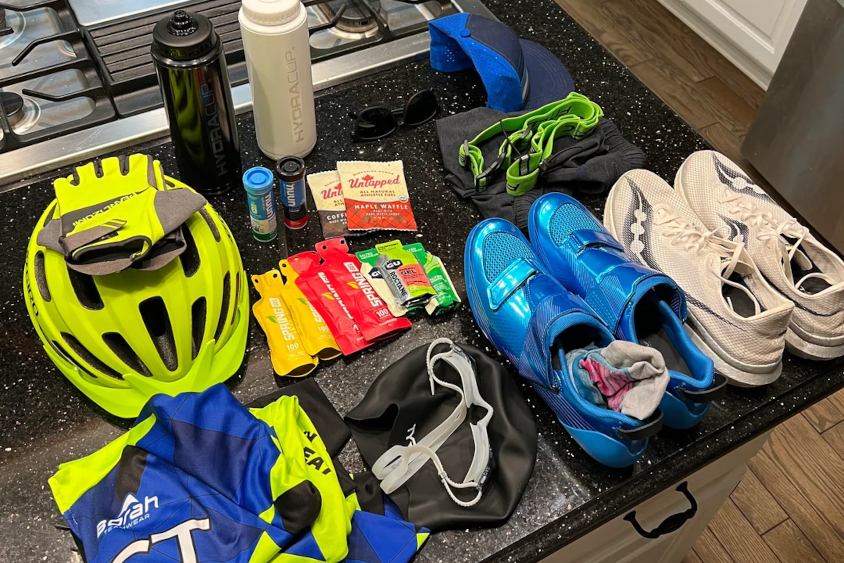
Setting out your tri gear isn't just a photo-op exercise, it's a great way to check your packing list. Credit: Anonymous Reddit user
Packing for Triathlon Travel
Using the list you made, pack your tri gear and street clothes in reverse order. This means the gear you need first gets packed last.
If you're flying, be prepared for unusual luggage arrival situations: Wear your running shoes on the plane, and pack other essentials in your carry-on. Take your race kit, swim goggles, cycling shoes, helmet, a bottle, sunglasses, and a few nutrition items. Should your luggage be separate from you while flying, you'll have the bare minimum you'll need to race.
You can track your checked luggage and your bike with an AirTag or similar device. If it gets separated from you, you'll be better equipped to locate it.
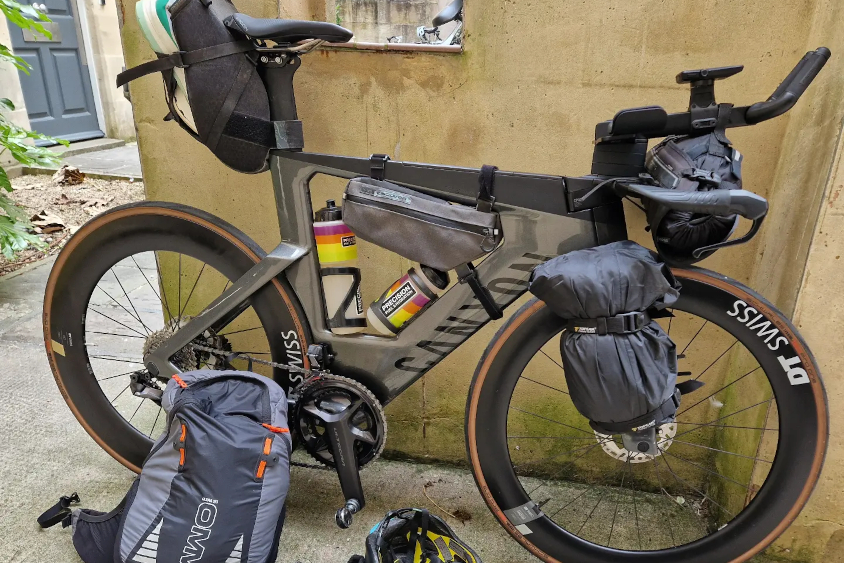
It's possible to bikepack to your race, but we've never tried it. Credit: Courtesy James Cunnama
Know Before You Go
Scout training locations before you arrive. If you use Strava, check heat maps for the most commonly used cycling and running routes. The same goes for open water swimming, but also do a quick online search for any local regulations and safety concerns. If you plan for pool swims, check ahead for pool hours, guest policies, and dedicated lap swim lanes.
If you're staying at a hotel, contact your hotel and inquire if they have any policies about bikes in guest rooms. If you send your bike ahead, ask whether the hotel concierge can receive and safely store it.
If you're staying in an Airbnb or similar accommodation, contact your host and ask about any concerns or considerations for sports equipment.
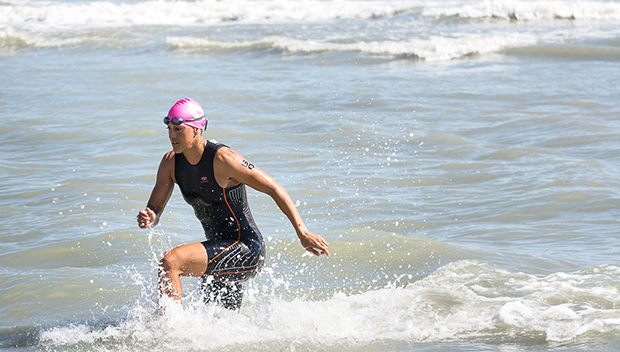
Unless you know ahead of time that your race will prohibit wetsuit use, pack a wetsuit just in case.
Packing Triathlon Swim Gear
While the swim portion of a triathlon is not as gear-intensive as cycling, you may need to pack a wetsuit (unless you know for certain your race won't be wetsuit-legal; pack it just in case) and goggles.
The recommended way to pack your wetsuit is to:
- Turn it inside out.
- Lay it on a towel.
- Cross the arms over the chest.
- Roll the suit from head to toe.
Put your wetsuit burrito into your transition bag, and after filling it with other items, put this into your bike box. Don't forget to pack a swim cap for any practice sessions.
If you're not taking a bike with you, put your transition bag back into your checked luggage, or check that bag separately.
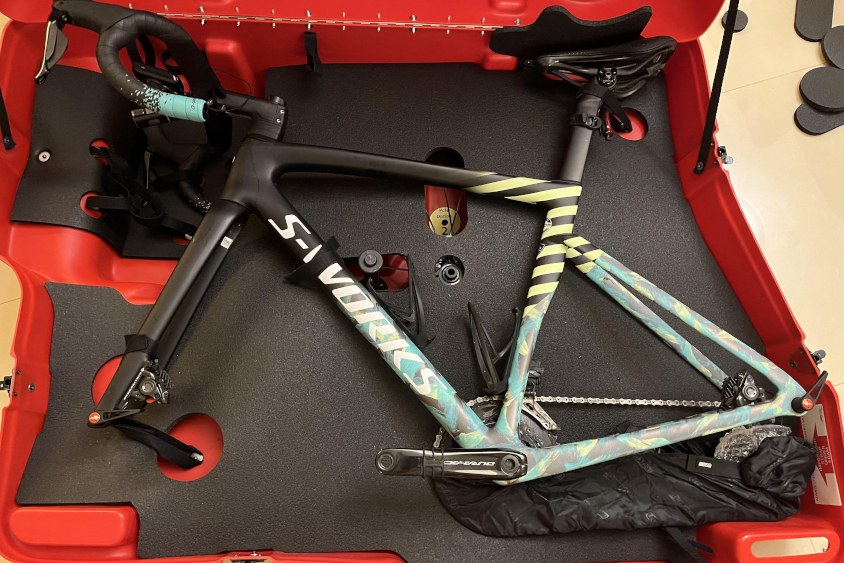
There is no substitute for a hard travel case for your bike's safety. Credit: Anonymous Reddit user.
Clean and Box Your Bike
Before packing your bike, whether you're doing it or a shop or service is doing it for you, thoroughly clean it before it's packed. This is a chance to spot any hidden damage, and no one really wants to work with a grimey bicycle.
We cannot stress enough how important it is to protect your bike when flying with it. That means using a hard-shell bike travel case. There's nothing so disappointing as getting to your destination only to find your bike was damaged in transport. A hard case is the best protection against damage. If you don't have a hard travel case, ask a friend to borrow one, or contact a local bike shop about renting one. If you have a soft bike travel case, it is the next-best option. Boxes used for shipping new bikes to retail stores are generally not meant for reuse, and do not offer ample protection.
If you plan to do your own wrenching, take lots of photos and videos of each step when disassembling and packing your bike so you can reverse the process to assemble it and recreate the disassembly for the return trip.
A TSA-approved lock will deter anyone without a key from opening the travel case.
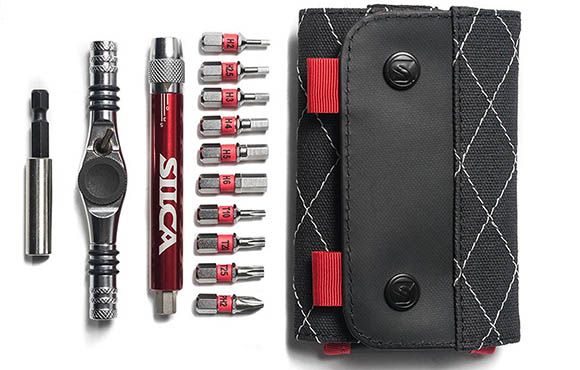
When assembling your bike, use a torque wrench on every fastener and bolt to ensure you don't overtighten them. Credit: Courtesy Silca.
A torque wrench is an essential, must-have tool for tightening precision fasteners that hold your bike components in place. Overtightening a fastener could lead to sheared aluminum, cracked carbon, and stripped threads. Most bikes have torque specifications printed on the respective parts, but if not, check online with your specific manufacturer.
Quick Tip
You'll also want to remove your derailleur hanger (zip-tie it to your chainstay) to minimize the risk of damaging a hard-to-source part when you need it most. Most bike boxes require removing your pedals and cockpit to fit. Even if your bike box includes padding, it's a good idea to be extra cautious. You can use sections of pipe insulation or pool noodles for additional padding.
It's a good idea to deflate your tires to about 10 psi (0.7 bar). If you have disc brakes, block the pads after removing the wheels. If your bike has Shimano Di2, unplug the derailleurs; if you use SRAM eTap, remove the batteries for travel.
Those who fly with their bike should contact their carrier ahead of time to ensure there's room for it. This is especially important if you plan to fly to a big event, where others on your flight might also be vying for limited bike berths. While you're inquiring about available space for your bike box, ask about the airline's current fee structure.
Many airlines charge a flat rate that isn't weight-adjusted. This means you can pack as many items, travel mini floor pump, race wheels in their own padded bags, nutrition, labeled CO2 cartridges and spare tires/plugs, transition bag with wetsuit, and more, into your bike box without making it unwieldy.
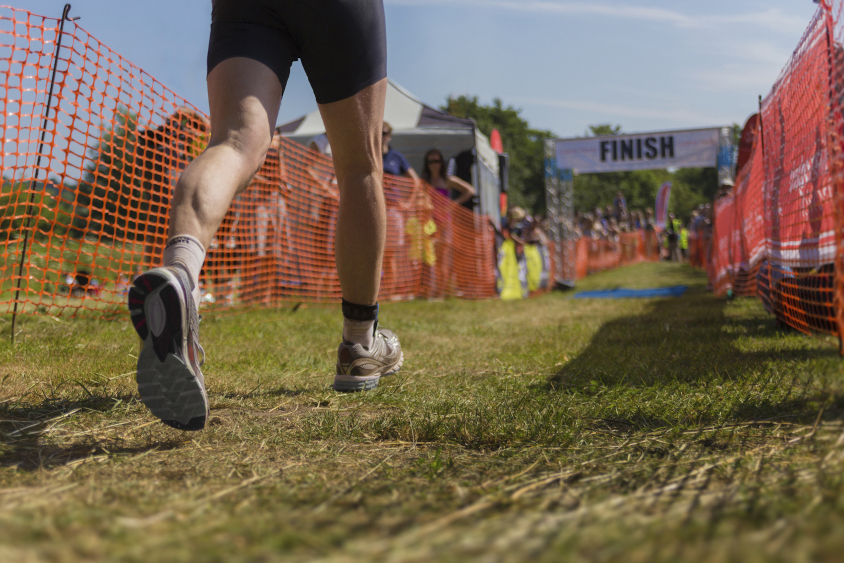
There's not much running gear to pack for a triathlon.
Run Around Triathlon Travel
Triathlon run gear is by far the easiest to pack, and you can even wear your running shoes on the plane to save space in your luggage.
Pack your race belt, sunnies, a hat or visor, and any nutrition into your transition bag before your wetsuit. This is also the time to consider other items like sunscreen, a heart rate chest strap, anti-chafe balm, nutrition and hydration options, and charging cables for your bike electronics and other battery-powered items.
Miscellaneous Triathlon Travel Tips
If you're concerned about getting sick when traveling to a race, don't be shy about wearing an N95 mask to reduce the chance of catching anything transmitted in close quarters like airplanes.
When traveling overseas, try to adjust to different time zones ahead of time. Many sports-specific wearable devices have travel-advisor features that can offer tips and monitor your waking and sleeping time to help you adjust to a different schedule.
If your mobile service plan offers travel features, make sure to enable them ahead of time, so the plan is available when you arrive at your destination.
And if you're an uber-prepper: Make sure your travel health insurance is up to date, just in case of the unlikely but unfortunate situation of illness or injury that requires medical attention.
Frequently Asked Questions
What's the best way to protect my bike when flying to a triathlon?
Use a hard-shell bike travel case whenever possible, it's the best protection against transport damage. A soft case is the next-best option. Boxes meant for shipping new bikes from the factory generally aren't built for reuse and don't offer enough protection.
What should I pack in my carry-on for a triathlon race trip?
Pack your race kit, swim goggles, cycling shoes, helmet, a bottle, sunglasses, and a few nutrition items in your carry-on, and wear your running shoes on the plane. That way, if your checked luggage is delayed or lost, you still have the essentials to race.
How do I pack a wetsuit for travel?
Turn it inside out, lay it flat on a towel, cross the arms over the chest, and roll it from head to toe into a compact bundle before placing it in your transition bag.
What tire pressure should I use when boxing my bike for travel?
Deflate your tires to about 10 psi (0.7 bar) before packing. If you have disc brakes, block the pads after removing the wheels, and disconnect electronic drivetrain components like Shimano Di2 or remove SRAM eTap batteries for travel.
Should I bring race wheels or training wheels when traveling to a triathlon?
If you're traveling and riding for more than just race day, bring your training wheels and save your race wheels for race morning. This reduces wear and lowers the risk of damaging your race wheels before you actually need them.