

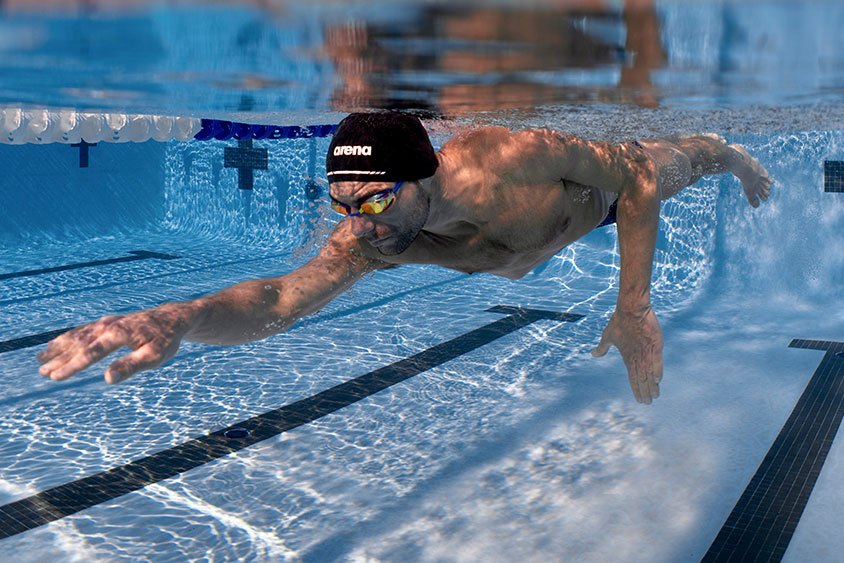
Photo by Bryan Mineo
If you’re a triathlete or fitness swimmer, there’s a high chance you’ve had this thought mid-set:
"I’m working hard… so why does this still feel so hard?"
In most cases, it’s not your conditioning at all. It’s posture.
Posture in swimming is the foundation on which everything else sits. When your posture is off, you create drag, lose power, and make breathing harder than it needs to be.
Why Trust Us?
ACTIVE.com's editorial team relies on the knowledge and experience of fitness and wellness experts, including competitive athletes, coaches, physical therapists, nutritionists, and certified trainers. This helps us ensure that the products we feature are of the highest standard. Collectively, the team has spent countless hours researching equipment, gear, and recovery tools to create the most accurate, authentic content for our readers. Customer satisfaction is also a key part of our review process, which is why we only feature highly rated products.
Most adult swimmers I work with struggle with the same couple of postural issues — and each one has a simple fix you can apply right away.
1) Head Position: Stop Burying Your Head
The common error
Many swimmers press their heads down, thinking it helps them stay streamlined. I’ve heard countless swimmers say they’ve been told to look straight down to help lift their legs in the water. This buries the head below the waterline, the breath becomes harder to grab, and your spine is out of alignment.
Why does it hurt your swimming?
When the head drops too low, the upper back often rounds, the shoulders roll forward, and the chest collapses. Breathing becomes harder because you have to lift your head to clear your mouth, rather than simply rolling your body to the side for each breath. It can also throw off body balance and contribute to sinking hips and extra drag.
The fix
Think: neutral head, long neck, or tall, proud posture.
Instead of forcing your head down, let it float in line with your spine with the waterline breaking just behind your hairline.
Try this cue:
- "Look slightly forward 1-2 ft on the black line below."
- "Stack the head on top of the shoulder, keeping the spine aligned."
A good indicator that you’re executing this? You can more cleanly find a pocket of air with each breath without having to lift the head.
2) Shoulder Position: Stop Collapsing or Rolling Forward
The common error
This one is a bit more nuanced and can be tricky to self-identify with, but I’ve found it in swimmers of all abilities. If you spend a lot of time at a desk, on a bike, driving, using a phone… you’re a prime candidate for this error!
Why does it hurt your swimming?
When you roll your shoulders forward, your deltoid (shoulder) muscles are isolated and asked to do a lot at once: stabilize, establish traction on the water, and pull/push the arm backward, etc. This repetitive overuse is a quick recipe for shoulder pain, a dropped-arm position (and subsequent drag), and timing and balance issues.
Over-extension can be just as problematic. When swimmers reach their arms forward, they often immediately push down on the water, causing a drop in body position, loss of balance, and overuse of the shoulder muscles to compensate.
The fix
The goal is a "proud posture," not a stiff one.
You want your shoulder blades rolled back and down, "pinned" slightly, creating a wide chest without arching your back.
Try this cue:
- "Shoulder blades in your back pockets."
- "Tall, proud posture"
If you feel tension in your traps, you’re likely shrugging your shoulders instead of setting your shoulders.
Your fitness can certainly carry you far in the water, but it’s your posture that can produce the biggest returns on your time investment. Swimming rewards alignment. When your head, shoulders, and spine are all stacked, you start working with the water rather than against it.