

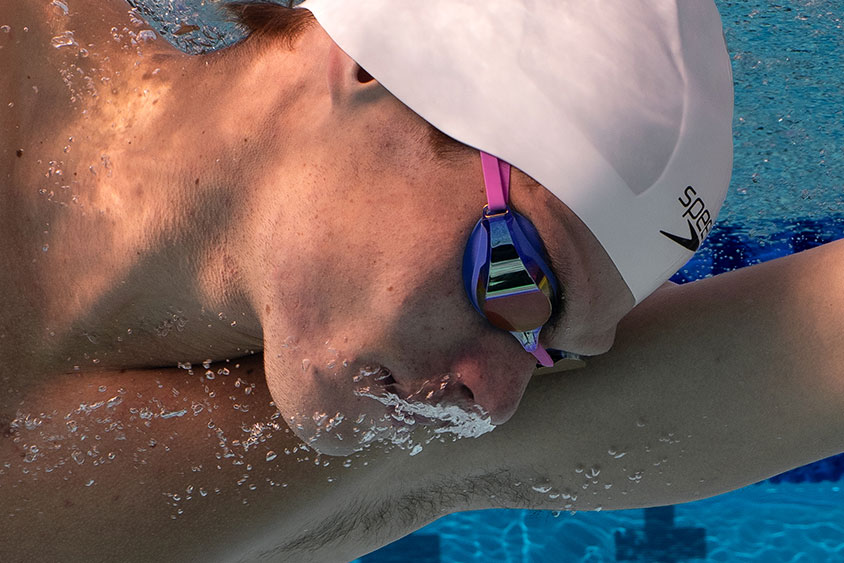
Do you ever reach the other side of the pool already gasping for air—despite swimming at what felt like an easy pace? The problem likely isn’t about your fitness. It’s how you’re breathing. Once you know the few common breathing mistakes, you’ll be able to apply simple changes to your stroke immediately. Your swimming will feel easier, smoother, and more efficient, with less effort.
Why Trust Us?
ACTIVE.com's editorial team relies on the knowledge and experience of fitness and wellness experts, including competitive athletes, coaches, physical therapists, nutritionists, and certified trainers. This helps us ensure that the products we feature are of the highest standard. Collectively, the team has spent countless hours researching equipment, gear, and recovery tools to create the most accurate, authentic content for our readers. Customer satisfaction is also a key part of our review process, which is why we only feature highly rated products.
The common thread of beginner and advanced swimmers is inefficient breathing. It may sound surprising, but breathing in—and through—water is far less intuitive than it seems. On land, breathing happens automatically. In the water, this becomes a skill that needs to be learned. Posture, timing, and tempo all influence how easily you can get air, and small inefficiencies add up quickly and significantly. The good news is that most breathing errors fall into a few predictable patterns.
-
Holding Your Breath Underwater - Many swimmers instinctively hold their breath each time they return their face to the water, rather than immediately exhaling. The swimmer then quickly forces out air as their face clears the water for the inhale, and the pattern repeats. This creates excess buoyancy in the lungs, which can cause the chest to lift and the hips and legs to sink.
Even holding your breath for a second can trigger panic and tension, making each breath feel rushed and incomplete.
The solution isn’t taking bigger breaths—it’s changing when you exhale. Be sure to begin exhaling immediately when your face returns to the water and continue until your next inhale. Imagine you’re sighing the air out rather than forcefully pushing it out. If you’re doing this correctly, you should feel a smooth stream of bubbles down your face the entire time your face is underwater. -
Taking in Too Much Air - It’s understandable to want to grab as much air as possible each breath—especially when you feel winded or stressed in the water. But overfilling your lungs actually backfires: it causes a big, forceful exhale and creates an exhausting breathing pattern. Instead of feeling energized by the air you took in, you end up tense, likely sinking in the water, out of rhythm, and tired much more quickly.
The key is consistent, relaxed breaths that mimic how you breathe out of the water. Before pushing off the wall, take a minute to listen to the rise and fall of your chest and the natural rhythm of your breath. You’ll likely notice your lungs filling to about 50% of their capacity and emptying the same volume. This is the ideal volume to ventilate your lungs with while swimming, rather than nearly filling them with each breath.
Try this on your next swim:
- Taking in small sips of air, about 50% of your lung capacity.
- Sigh out the same volume during each exhale. Focus on rhythm rather than volume. Aim to keep things smooth.
-
Breathing Too Late - Most timing issues in freestyle derive from breathing too late. When a swimmer delays the exhale, there's less time available for the breath, which often creates a sense of urgency and leads to a gasping inhale. Many swimmers fear water entering their mouth or try not to disrupt their stroke rhythm, so it’s easy to understand why this habit develops.
Efficient and effective breathing starts earlier in the stroke than most swimmers realize. By beginning the exhale sooner—while the face is still in the water—you give yourself time for a calm, controlled inhale instead of a desperate one.
Put this into practice:
- Sync your breath with your arms. At the most lengthened point of each stroke—when the lead arm is fully extended—begin either the inhale or exhale.
- Silently cue “inhale” and “exhale” in your head as each breath begins to reinforce proper timing and rhythm.
You don’t need stronger lungs or more yardage to breathe better underwater. By improving how and when you breathe, you can reduce tension, improve rhythm, and swim more efficiently and confidently. Master your breath, and everything else in your stroke has a better chance to fall into place.
Long May You Swim,
The Swim Mechanic