



Training through winter is one of the biggest challenges for endurance athletes, but it can also be a significant advantage you can give yourself. With the right winter running gear that actually works, you can stay consistent, stay safe, avoid setbacks, and keep building toward your goals for your first triathlon in 2026.
I understand what running in the cold feels like because we have lived it. I live in Winterpeg (Winnipeg), Canada, so I have trained through snow, wind, slush, and sub-zero mornings.
I know how frustrating it is when your running gear makes you too sweaty, too cold, or uncomfortable. The good news is that with the right gear, winter can become a powerful training season instead of a struggle.
Why Trust Us?
ACTIVE.com's editorial team relies on the knowledge and experience of fitness and wellness experts, including competitive athletes, coaches, physical therapists, nutritionists, and certified trainers. This helps us ensure that the products we feature are of the highest standard. Collectively, the team has spent countless hours researching equipment, gear, and recovery tools to create the most accurate, authentic content for our readers. Customer satisfaction is also a key part of our review process, which is why we only feature highly rated products.
Key Takeaways
By the end, you’ll understand:
- How to layer properly for winter.
- What materials help you stay warm without overheating.
- Why merino wool is the best base layer.
- Which running shoes work best in winter.
- How to handle icy and slushy conditions safely.
- What clothing actually matters in cold weather.
- How to protect your hands, feet, and face.
- How to stay consistent running in cold weather.
- How winter training helps you prepare for triathlon season.
How to Layer Your Winter Running Gear for Cold Weather
The biggest mistake runners make in winter is piling on bulky clothing. The goal is to stay warm without trapping sweat. Your body generates heat when you move, while it’s your job to manage that heat.
Use a simple layering system:
- Base layer to manage moisture and provide warmth
- Outer layer for wind and weather protection
- Add another mid-layer for additional insulation when it's extremely cold
This system keeps you warm, dry, and comfortable on every winter run.
The Best Base Layer for Staying Warm and Dry
Your base layer is the most essential piece of winter running gear. It sits directly on your skin and controls sweat.
The best option is merino wool.
Why merino works:
- Stays warm even when wet
- Naturally wicks sweat
- Does not smell quickly
- Feels soft and snug
- Keeps moisture away from your skin
Avoid these materials:
- Synthetic base layers that get sticky and smelly
- Cotton, which provides no warmth when wet
Merino helps you stay warm without overheating, even when your effort level changes.
Mid Layers That Trap Heat Without Overheating
Mid layers add warmth without blocking the flow of sweat.
Good mid-layer options:
- Thicker merino tops
- Light fleece pullovers
- Thermal long sleeves
- Breathable fabrics
Avoid:
- Heavy, bulky jackets
- Thick cotton sweaters
Your goal is to insulate without trapping moisture. If you need more warmth, add another merino layer instead of a heavier shell.
Outer Layers for Wind, Snow, and Icy Conditions
Your outer layer protects you from wind, snow, and cold air.
Look for a running jacket that is:
- Windproof
- Water-resistant
- Lightweight
- Breathable
- Not bulky
Avoid thick insulated coats. Your body already produces heat. You just need protection from the elements.
Key features:
- Waterproof or water-resistant fabric
- Ventilation zips
- Reflective strips for visibility
- Adjustable hood or collar
The Best Winter Running Shoes for Cold-Weather Runs
Most runners do not need spikes for winter. The right gear focuses on stability, grip, and comfort.
What matters most:
- Good traction
- Slightly rugged sole
- Water resistance
- Secure fit
- Comfort in colder temps
What Makes a Good Winter Running Shoe
A good pair of winter running shoes should:
- Feel stable
- Grip wet pavement and snow
- Stay comfortable in colder temperatures
- Handle slush
- Keep feet warm
Look for:
- Slightly tougher outsole
- Water-resistant upper
- Secure heel fit
- Comfortable cushioning
Most runners prefer regular running shoes with better grip rather than aggressive spikes.
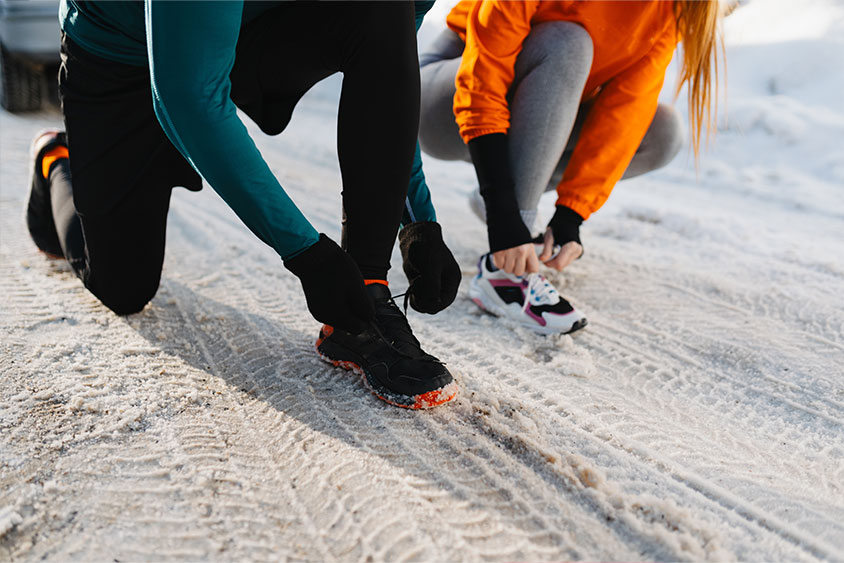
Staying Safe While Running in Cold Weather
Winter conditions change how you should approach every winter run. Snow, icy pavement, reduced daylight, and unpredictable surfaces all increase risk. The goal is not just to stay warm, but to stay upright, visible, and in control while running in cold weather.
Smart pacing, better awareness, and the right gear make a massive difference in keeping you safe through the winter months.
How to Run Safely on Icy and Slippery Surfaces
Slipping is the biggest safety risk when running in the cold. Black ice, especially on pavement, is often invisible and extremely dangerous.
Key safety adjustments:
- Slow your pace on icy sections
- Shorten your stride
- Avoid fast turns
- Stay upright and relaxed
- Be cautious on uphills, downhills, and side hills
- Assume pavement may have hidden ice
Why pavement is risky:
- Black ice blends in visually
- Road camber increases slip risk
- Shaded areas stay frozen longer
Packed snow usually offers better traction than clear pavement. When in doubt, choose snow over bare roads.
Visibility and Awareness in Low Light Conditions
Winter means less daylight and more chilly morning and evening runs. Visibility is a significant safety factor for every runner.
What helps you stay seen:
- Clothing with reflective strips
- Lights or reflective accessories
- Bright colors
- Rear-facing reflectivity
Why rear visibility matters:
- You cannot hear cars approaching
- Drivers see movement from behind
- Back-facing reflectivity is most critical
Road-running safety tip:
- Always run into traffic
- Make eye contact with drivers
- Stay predictable with your movement
Your running gear should protect you from the weather and help drivers see you clearly.
When Traction Devices Can (and Can’t) Help
Spikes and coils are not a default solution for winter running shoes. In many cases, they can actually increase risk.
Use traction devices only if:
- You are running on solid ice
- The entire route is frozen
- Snow is not packed
- You feel unstable without them
Avoid traction devices when:
- Surfaces change frequently
- Pavement is mixed with snow
- Ice is thin or uneven
- You cannot see what’s ahead
Why they can be risky:
- They alter your running gait
- They increase lower-leg injury risk
- They may slide on smooth ice
- They reduce adaptability on mixed terrain
For most runners, a good pair of shoes with solid traction is safer than aggressive spikes.
Running in Cold Weather With the Right Gear
Consistency matters more than perfection. Winter training builds mental strength and aerobic fitness that carries into triathlon season.
Choosing the Right Gear for Every Winter Run
Match your gear to the conditions:
Slightly chilly and dry:
- Merino base
- Wind shell
Very cold or windy:
- Thicker merinobase
- Windproof outer layer
- Gloves and hat
Wet and slushy:
- Water-resistant jacket
- Traction-focused shoes
- Extra socks
Accessories That Make Winter Running Easier
Your hands, feet, ears, and face lose heat fast. As a general guideline, it's better to keep your extremities very warm and your body and legs just comfortable, but slightly chilled, to reduce sweating.
Essential accessories:
- Windproof gloves to keep hands warm
- Merino wool socks
- A beanie or headband
- A neck gaiter or buff
- Glasses for windy days
Winter wind can make your eyes water, so consider wearing some glasses to help protect your vision.
Winter does not have to slow you down. With the right winter running gear, smart layering, and practical choices, you can train comfortably through the coldest months.