

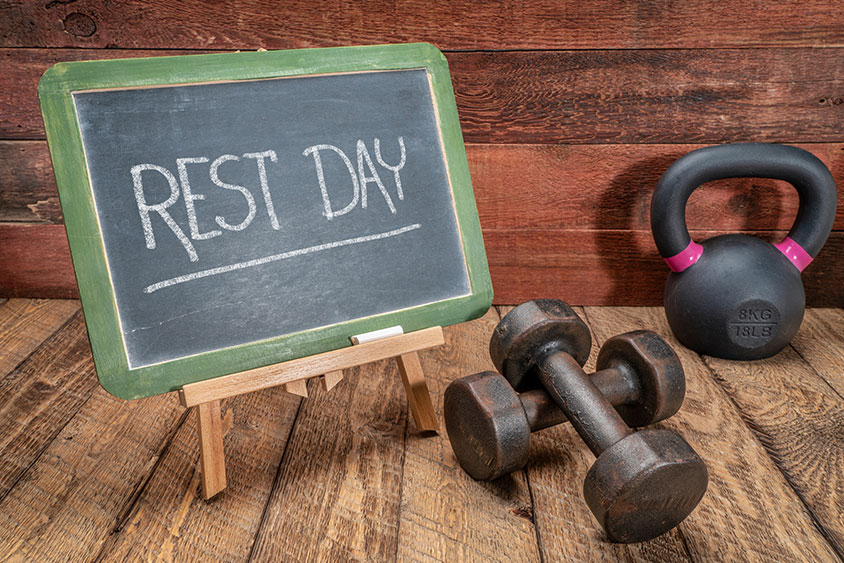
When you are consistent, committed, and putting in the miles (when everything feels like it is clicking), that is often the moment to pause. It is easy to believe that progress comes from doing more. More runs. More miles. More effort. And when your body is keeping up, there is little reason to question it. However, even the most finely tuned machine needs rest before things overheat or one part starts to break down.
Why Trust Us?
ACTIVE.com's editorial team relies on the knowledge and experience of fitness and wellness experts, including competitive athletes, coaches, physical therapists, nutritionists, and certified trainers. This helps us ensure that the products we feature are of the highest standard. Collectively, the team has spent countless hours researching equipment, gear, and recovery tools to create the most accurate, authentic content for our readers. Customer satisfaction is also a key part of our review process, which is why we only feature highly rated products.
Recovery Is Where The Body Gets Stronger
Running places stress on the body. With each run, muscles undergo minor breakdown, connective tissues are loaded, and the nervous system is challenged. But the goal of training isn’t just to apply stress – it is to adapt to it. That adaptation happens after the run, in between the runs, when the body has time to repair, rebuild, and come back stronger. Without that recovery time, the body isn’t building; it is simply trying to keep up.
The run is the stimulus. The progress comes after.
Rest Helps Prevent Common Running Injuries
Without enough recovery and rest, the body doesn’t get the chance to repair fully. Stress builds. Tissues weaken. Compensation begins to occur. Movement becomes less efficient. This is where many common running injuries appear. Overuse injuries, like Runner’s Knee, Shin Splints, Plantar Fasciitis, and Achilles Tendinopathy, also reflect under-recovery.
Most running injuries accumulate over time.
The Nervous System Needs A Break, Too
Running also places demands on more than just your muscles. Your nervous system is responsible for coordinating each movement, maintaining balance, and keeping your stride efficient. This piece of the system also gets tired. When rest is denied, coordination starts to decline. Movements can feel less controlled, and the body begins to rely on compensations to keep going. Over time, this can lead to inefficiency and eventually, injury.
A fatigued system simply cannot move well, and poor movement under stress and load is where problems begin.
Rest Days Improve Performance (Not Just Prevent Injury)
If your goal is to run better, not just more, then rest matters. Rest allows your body to show up stronger on run days – with more energy, better control, and improved efficiency. Without it, the body will just go through the motions. The miles are there, but the quality isn’t. More isn’t always better.
Rest will not set you back. It will set you up.
Signs You’re Not Taking Enough Rest
The body is usually clear when it needs rest. You may feel persistent soreness or heaviness in your legs, or a drop in performance despite consistent training. Runs that once felt smooth can start to feel forced. You might notice small aches that don’t fully go away or just a general sense that something feels off. These are all early signals that it may be time to take a load off. Even if unclear of the signs or signals, factor in a rest day just to be sure.
The body often whispers before it demands your attention.
What A Rest Day Could Look Like
Rest won’t always mean doing nothing, but it does mean reducing stress on the body; for some, that could look like a full day off. For others, it can include light movement that supports recovery rather than challenges it, such as walking, gentle mobility work, or low-intensity cross-training. A rest day is not meant to be another hard workout in disguise. It is an opportunity to support the body by improving circulation, maintaining mobility, and allowing systems to recover without adding additional strain.
The key is intention.
How Often Should You Take Rest Days?
How often you take rest days will depend on your training level, mileage, and overall recovery. For most runners, one to two rest days per week is enough. Those new to running or increasing their mileage could benefit from more frequent rest until the peak of the training change has passed. What matters most is not following a rigid rule but paying attention to how your body is responding. Consistent training is important, but so is giving your body the time it needs to adapt to that training.
Rest cannot be separate from training; it must live as part of it. It is what allows the body to repair, rebuild, and come back stronger. Without it, progress can stall, performance can decline, and the risk of injury increases. The strongest runners know when to push and when to recover. Sometimes, the most productive thing you can do for your running is step back so that your body can move forward.