


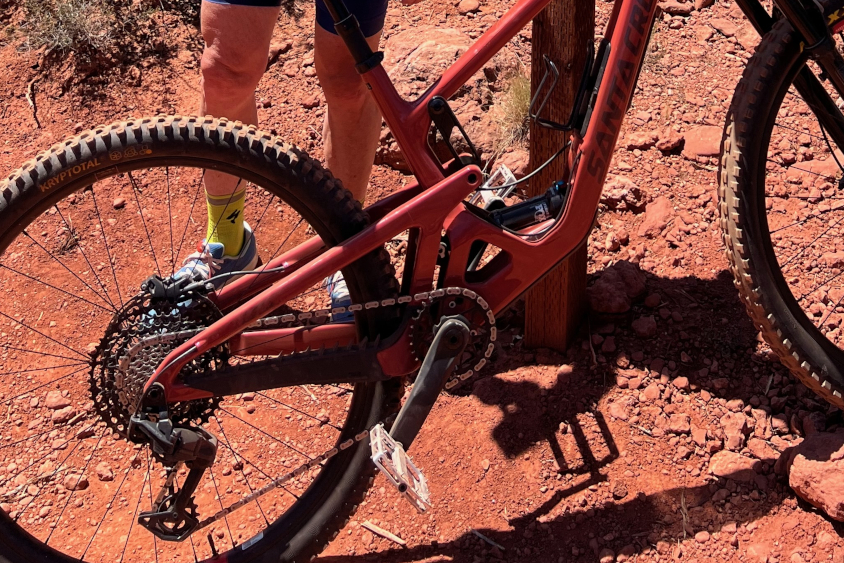
Flat pedals are great for super technical mountain bike trails and daily, short bike commutes, where putting a foot down quickly can be crucial. Credit: Greg Kaplan
While not as polarizing as the settled debate about tubeless bike tires vs tires with inner tubes, or rim brakes being pushed out of the market by disc brakes, the debate surrounding flat pedals or clipless pedals is yet to be settled.
So what's the big deal about pedals?
Why Trust Us?
ACTIVE.com's editorial team relies on the knowledge and experience of fitness and wellness experts, including competitive athletes, coaches, physical therapists, nutritionists, and certified trainers. This helps us ensure that the products we feature are of the highest standard. Collectively, the team has spent countless hours researching equipment, gear, and recovery tools to create the most accurate, authentic content for our readers. Customer satisfaction is also a key part of our review process, which is why we only feature highly rated products.
One of the five touchpoints on a bike, each hand, each foot, and the saddle, pedals directly transfer the power you generate to your bike, propelling you forward.
Entire bike technology ecosystems are developed around optimizing the rider-bike connection. Some pedaling systems with onboard power measurement can even display measurements of how centered your foot is and where it has the optimal and maximum power phase.
Although we all learn to ride a bike equipped with flat pedals, many cyclists off- and on the road use a pedal system that physically attaches their shoes to their bikes. But some still eschew this connection for the freedom afforded by flat pedals.
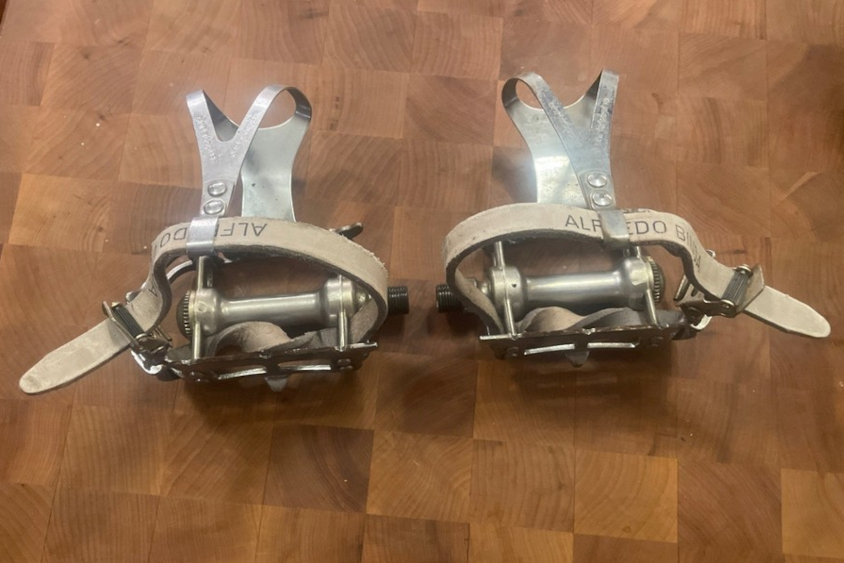
Campagnolo platform pedals with a toeclip and strap. Credit: Creative Commons
Why Do You Clip In With Clipless Pedals?
At the 1985 Tour de France, Bernard Hinault, the Franco teammate of American cyclist and three-time Tour champion Greg LeMond, used a technology developed the previous year to ride his way into cycling history books: clipless pedals.
Up until 1984, the peloton used toe clips, metal cage-like contraptions affixed to pedals, with a leather security strap that wraps over the top of the foot, to optimize their pedal stroke and stay connected with their bikes, especially when climbing and sprinting.
Hinault, who in 1985 became a five-time yellow jersey winner, eschewed traditional toe clips for a system developed by the ski binding manufacturer Look. The system was (toe) clipless, and thus the beginning of an overnight paradigm shift that favored technology over tradition.
The system was referred to as clipless because it eschewed the need for toe clips and straps, which had been the prevailing technology used on bikes for nearly one hundred years.
But the majority of cyclists never pin on a race number, and even fewer ever toe the line at a race, and even fewer race up and speed down the French Alps. So why should you care about pedals?
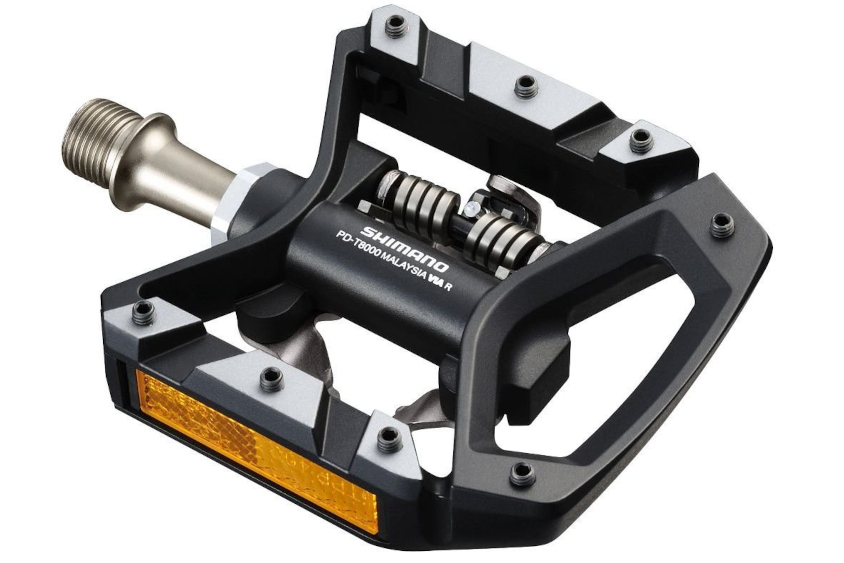
Some pedals are flat on one side, and have a clipless system on the other. Credit: Courtesy Shimano
What Pedal System Is Best for You?
If you only cycle on occasion, on flat and level roads and never have to get out of the saddle to climb, flat pedals just might be the perfect fit for your needs. They cost less and need less upkeep than clipless pedal systems.
With flat pedals, you don't have to worry about scuffing your work shoes, or trying not to topple over while putting a foot down at a traffic light, or having to change shoes just to ride to and from your home.
If you're an urban commuter who does not have to manage much elevation change, you might be able to use a dual pedal system that has a flat pedal on one side and a clipless entry point on the other. This accommodates both street- and cycling shoes. Some trail riders might also do well with dual pedal systems. If off-road riding is more your speed, this beginner's guide to mountain biking covers the other gear decisions worth thinking through.
Flat pedals have their place, and are excellent options for many cyclists who are less concerned with performance and power, and just want to spin along carefree.
Quick Tip
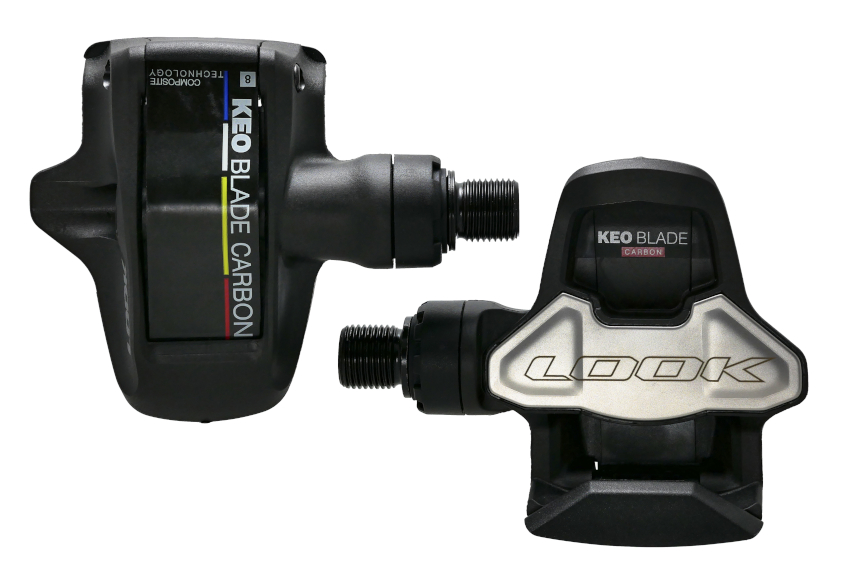
Look was a pioneer of the clipless pedal system. Credit: Petar Milosevic/CC
The Case for Clipless Pedals
Connection with one's bike allows for optimal power transfer, which may be 10% to 15% greater with clipless pedals than without.
Even hardcore bike commuters will tell you that using cycling shoes connected to one's bike allows for easier, optimal spinning, which means less sweat, less fatigue, and faster riding for the same effort.
Cycling shoes with clipless pedals allow a smoother pedal stroke and more consistent and efficient power delivery. When climbing, and especially when standing out of the saddle, you can direct power to your pedals on the upstroke, which is not possible with flat pedals.
When clipped in and pedaling, you pedal in a circle; there's less stamping up and down when each foot is between one to five o'clock positions.
We're a fan of clipless pedals for almost all situations
Clipless pedals also make maneuvering one's bike easier as they offer greater control. However, they take some practice to get used to clipping in and out, without fumbling and "turtling" at a traffic stop.
While clipless pedals are ideal in most situations, they are not foolproof.
Most clipless pedal cleats for road cycling shoes have some no-skid surface on them, but they are generally not walkable for more than short distances. Off-road pedals accommodate shoes with recessed cleats and greater flexibility, which makes them slightly more walkable.
Clipless pedal systems require proper setup. You'll need to get a bike fitting session with your bike shoes and clipless pedal cleats to ensure they are properly aligned, and your saddle height is set correctly. You'll also want to ask what cleats offer float (side-to-side freedom, usually 0, 2, 4.5, 6, or 9 degrees for road cleats, depending on the brand and system) that best suit your needs.
Although most road pedal systems don't collect junk, off-road cyclists all have stories about missing a clip-in due to pedals or cleats jammed with dirt and/or mud that made clipping in a pain.
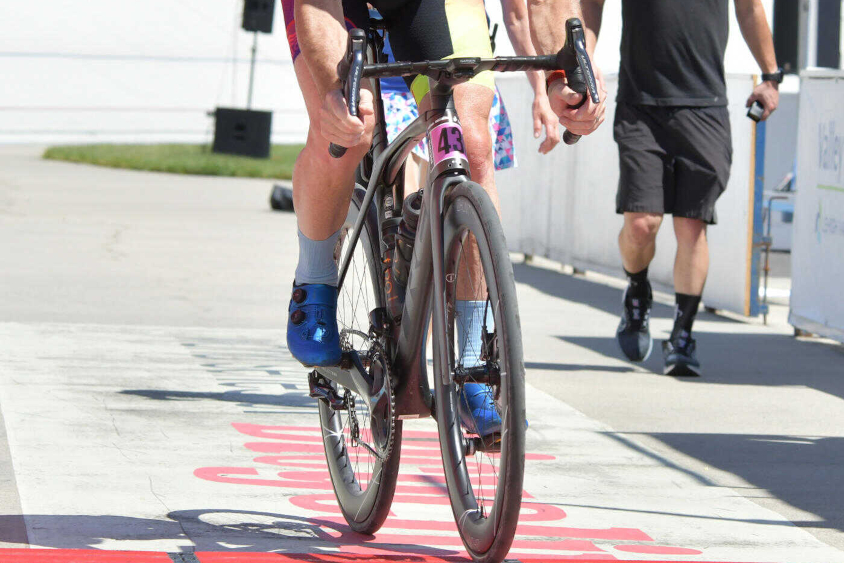
There's no question: Clipless pedals deliver power efficiently and consistently when riding on the road. Credit: Greg Kaplan
Verdict
We're a fan of clipless pedals for almost all situations. They offer better control and greater power delivery through the connection with your bike. But there's a big but: We like flat pedals for commuting and super technical mountain bike trails, as the ability to put a foot down quickly outstrips power delivery.
Clipless Pedals
Pros:
- More efficient power transfer
- Easy to sustain high cadence
- Greater control
- Consistent foot placement
- Less fatiguing
- Better clearance over obstacles
Cons:
- Learning curve
- More difficult to mount/dismount
- More maintenance required
- Requires bike fit for optimal installation
Flat Pedals
Pros:
- Quicker and easier to dismount/mount your bike
- Promotes good bike handling and technique
- Easy to adjust position on the pedal and saddle
Cons:
- Requires attention to foot placement
- Sub-optimal power transfer
- Harder to sustain high cadence
- Less clearance over obstacles than clipless
Frequently Asked Questions
Are clipless pedals actually better than flat pedals?
For most riding situations, yes. Clipless pedals offer more efficient power transfer, better control, and less fatigue over long rides. That said, flat pedals still have a clear edge for technical mountain bike trails and commuting, where being able to put a foot down instantly matters more than power delivery.
How much more power do clipless pedals provide?
Connection with your bike through clipless pedals can improve power transfer by roughly 10 to 15 percent compared to flat pedals, largely because you can apply power through more of the pedal stroke, including the upstroke.
Are clipless pedals hard to learn?
There's a learning curve, mainly around clipping in and out smoothly without fumbling at stops, sometimes called "turtling." Most riders get comfortable with practice, but it's worth practicing clipping in and out in a safe, low-traffic area before riding in traffic.
What is a dual pedal system?
A dual pedal has a flat surface on one side and a clipless entry point on the other. It's a popular choice for urban commuters and some trail riders who want the option to wear either street shoes or cycling shoes depending on the ride.
Do I need a bike fit if I switch to clipless pedals?
Yes, it's strongly recommended. A bike fitting session with your cycling shoes and clipless cleats ensures proper alignment and correct saddle height, and helps you choose the right amount of cleat float for your riding style.