


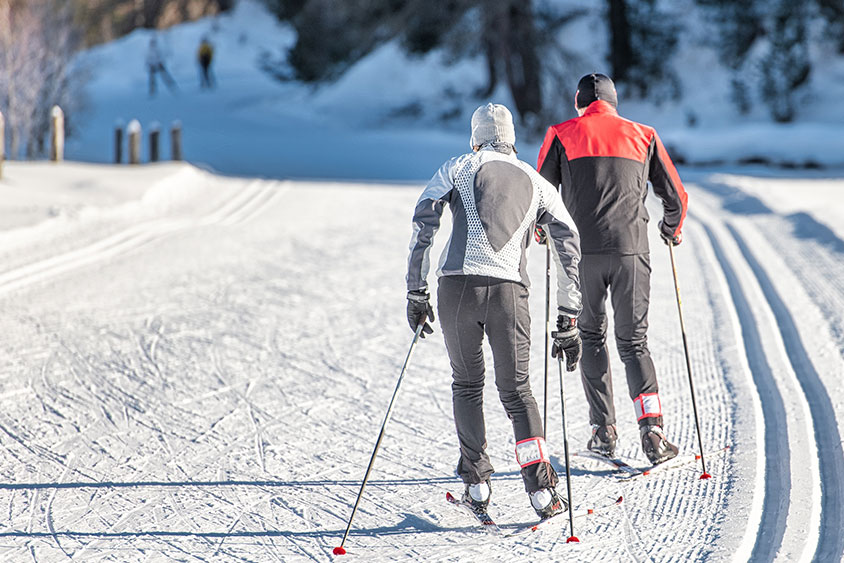
If you’re looking to start an exercise routine to boost your heart health this year, leave the running shoes in their box and the bike in its rack; it’s time to click into a pair of cross-country skis.
Why Trust Us?
ACTIVE.com's editorial team relies on the knowledge and experience of fitness and wellness experts, including competitive athletes, coaches, physical therapists, nutritionists, and certified trainers. This helps us ensure that the products we feature are of the highest standard. Collectively, the team has spent countless hours researching equipment, gear, and recovery tools to create the most accurate, authentic content for our readers. Customer satisfaction is also a key part of our review process, which is why we only feature highly rated products.
Cross-country skiing is a form of Nordic skiing where you move across snow under your own power rather than racing downhill. Skiers use long, lightweight skis, flexible boots, and poles to create a smooth, rhythmic stride that feels like walking, running, and skating blended as they move through the snow.
There are two main techniques. Classic skiing follows parallel tracks and uses a forward kick-and-glide motion, while skate skiing pushes outward in a V-shape, similar to ice skating, and is faster and more athletic. Both styles demand balance, coordination, and endurance, engaging the legs, core, and upper body in a steady, full-body workout.
Both styles of cross-country skiing are strong aerobic workouts that work all major muscle groups over a sustained period. This raises heart rate into a healthy training zone and keeps it there, helping strengthen the heart muscle so it pumps blood more efficiently over time. Because it is a self-powered, full-body sport that uses arms, shoulders, core, and legs simultaneously, cross-country skiing puts your cardiovascular system to work. The heart must develop significant strength and endurance to pump blood and oxygen to all major muscle groups. It is also a low-impact sport that keeps joints healthy, supports longer training, and improves heart health over time. Done consistently, this sport can also improve blood pressure, cholesterol levels, and circulation. Over time, this kind of steady aerobic exercise can lower resting heart rate and improve overall cardiovascular efficiency. In fact, elite Nordic skiers have some of the highest VO2max scores of all athletes, and studies show that regular, long-distance skiing can reduce the risk of hypertension by 41%. Just as important to physical heart health is the mental contribution. The experience of cross-country skiing is deeply connected to nature: quiet and immersive, gliding on snow through long stretches of open landscape, making it both calming and meditative while remaining physically demanding. Spending time outdoors in winter landscapes can reduce stress. Lower stress levels mean lower cortisol and less strain on the heart, so the mental calm of skiing supports heart health too.
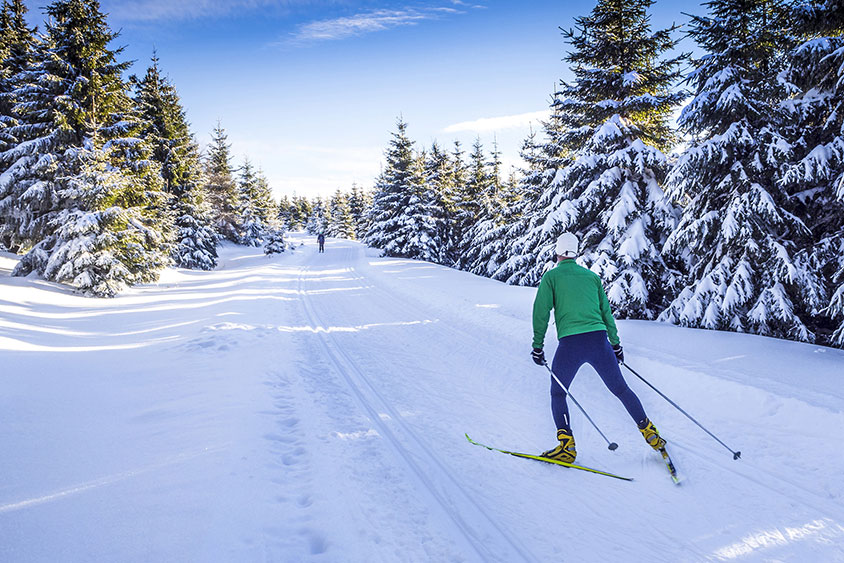
Cross-country skiing is known for its efficiency and accessibility—you can do it on groomed trails, in parks, or deep in the backcountry. However, if you happen to live in a warmer winter climate without access to snowy terrain, don’t give up on this workout. There are SkiErgs, training machines that mimic the unique ski movement, at many gyms, providing a beneficial indoor workout. Another warm-weather way to reap the cardio benefits of Nordic skiing is roller skis. This blend of skis and roller skates, with special pavement-pole tips, enables a full-body workout on roads or paths.
In the end, cross-country skiing offers a rare combination of powerful cardiovascular training, low-impact movement, and mental restoration. Whether gliding across snowy trails, training indoors on a SkiErg, or rolling along paved paths, the sport offers an effective, sustainable way to strengthen the heart while staying connected to the joy of movement. For those seeking a lifelong activity that supports both physical and mental heart health, cross-country skiing is a stride worth taking.