

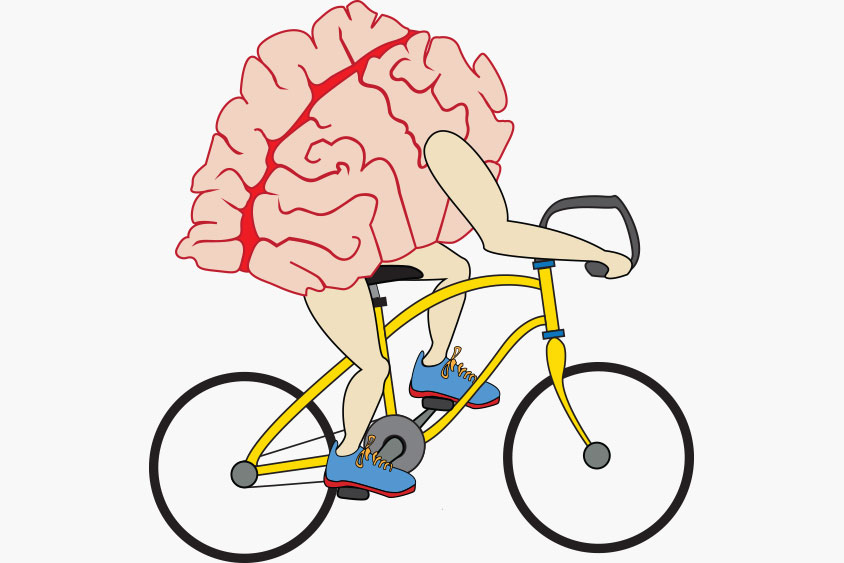
Ask most serious cyclists why they ride, and they'll tell you about fitness goals, training blocks, or the next event on their calendar. Push a little harder, and you'll usually get a different answer: it clears their head. The ride becomes what makes everything else manageable. That's not just an anecdote. It's a pattern consistent enough across years of research and the experiences of endurance athletes that it deserves a closer look. Cycling is often framed around performance and physical health. But for many riders (including me), the mental return on investment is what keeps them coming back.
Why Trust Us?
ACTIVE.com's editorial team relies on the knowledge and experience of fitness and wellness experts, including competitive athletes, coaches, physical therapists, nutritionists, and certified trainers. This helps us ensure that the products we feature are of the highest standard. Collectively, the team has spent countless hours researching equipment, gear, and recovery tools to create the most accurate, authentic content for our readers. Customer satisfaction is also a key part of our review process, which is why we only feature highly rated products.
What's Actually Happening in Your Brain
Steady aerobic exercise — the kind that cycling is built for — produces measurable changes in the brain's chemistry. Endorphins get most of the credit, and they deserve some of it: physical exertion triggers their release, which is part of why a hard ride can shift your mood in ways that are difficult to explain to someone who hasn't experienced it. But the more interesting story is what happens over time.
A landmark clinical trial published earlier this year in the Journal of Sport and Health Science found that participants who engaged in 150 minutes of moderate-to-vigorous aerobic activity per week for a full year showed a significant reduction in long-term cortisol levels compared to a control group that didn't change their activity. Cortisol is your body's primary stress hormone. The implication is that regular cardio doesn't just help you relax in the moment — it lowers your body's baseline stress setting. That's not a mood boost. That's a biological shift.
For anyone who has come home from a long ride and noticed that the thing that was eating at them before they left somehow feels smaller, it’s not your imagination. That's your nervous system doing its job.
The Outdoor Advantage
There's something that indoor training can't quite replicate, and it's not the miles. It's the environment.
Across a range of experimental studies, people experienced better psychological outcomes when they engaged in physical activity in natural outdoor environments rather than urban ones, with particular benefits for energy, positive engagement, and reduced anxiety and anger. The research points to two overlapping mechanisms: our evolutionary preference for natural environments and what psychologists call attention restoration. This is the idea that nature replenishes the directed, effortful attention we burn through during a demanding day.
Put simply, your brain gets a different kind of rest on a trail or a quiet road than it does on a stationary bike in a gym. Both have value. But if mental reset is part of what you're after, getting outside matters.
Routine Is Underrated
One of the less glamorous but more reliable mental health benefits of cycling is simply this: it gives you something to do at the same time, most days, that your body and mind come to expect.
Routine movement is its own form of regulation. It creates structure when other things feel chaotic. It provides a reliable period each day where the only real job is to pedal and pay attention to the road. For people managing stress, anxiety, or low-grade mental fatigue, this predictability has genuine value.
The research on cycling commuters is also eye-opening. A study drawing on data from over 378,000 people found a 15 percent reduction in prescriptions for depression or anxiety among cycle commuters over five years, compared to non-cyclists. That's a large sample and an objective measure, not a self-reported survey. Regular cycling, even just casually, is associated with meaningful improvements in mental health outcomes.
The Case for Group Rides
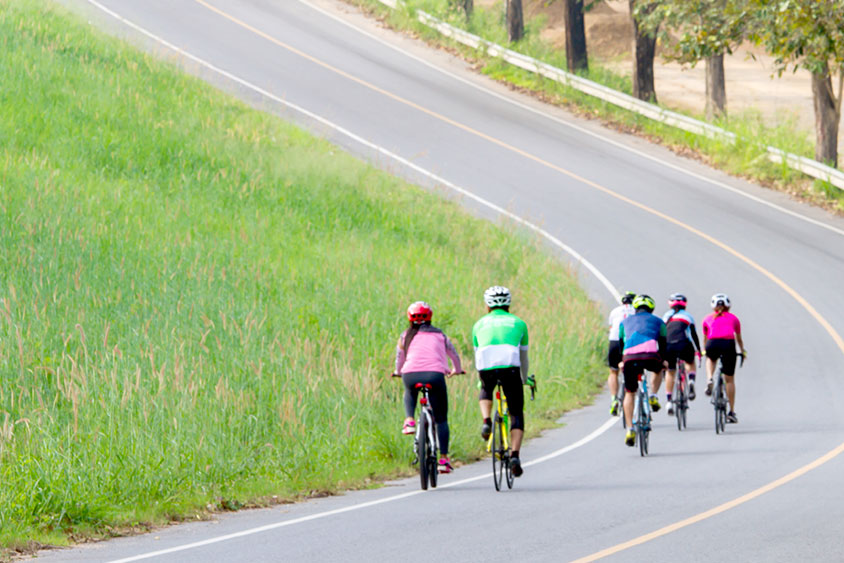
Solo riding has its own particular value. If you’re like me, you enjoy the quiet, self-directed pace, the time to think without anyone else's agenda in the mix. I've had more than a few problems work themselves out somewhere around mile 20 of a ride I started in a bad mood. But group riding does something different. A 2025 University of Georgia study found that it's not just the physical movement that affects mental health. How, where, and why you exercise can make a difference. The research found that leisure-time cycling, done voluntarily in a positive social context, produced meaningfully better mental health outcomes than exercise that felt obligatory or isolated. As the study's co-author, Patrick O'Connor, put it: "If we're trying to help people's mental health with exercise, then not only do we need to think about the dose and the mode, we also need to ask: What is the context?"
The shared effort of a group ride, the casual conversation, the accountability of showing up for other people — these aren't incidental. They're part of what makes cycling sustainable as a long-term mental health practice, not just an acute stress relief.
For riders who are newer to the sport, group rides carry an additional benefit: they provide a community of people who share the same slightly unusual hobby of spending hours on a bicycle, which turns out to be a meaningful thing to have in common.
You Don't Have to Ride Hard for This to Work
One of the more common misconceptions about exercise and mental health is that intensity is what drives the benefit. It isn't — at least not primarily. The cortisol research cited above was based on 150 minutes of moderate-to-vigorous activity per week, a threshold most recreational cyclists meet without trying. The mental health benefits of outdoor exercise are evident across a wide range of activities.
This matters because it means you don't need a training plan to start getting a return. A 45-minute ride at a pace you can sustain, done three or four times a week, is enough to shift how you feel over time. The goal doesn't have to be a century or a race. It can simply be showing up.
The Ride You Don't Want to Take
There's a particular kind of ride that most experienced cyclists know well: the one you almost didn't take. You were tired, or unmotivated, or convinced that 45 minutes on the bike couldn't possibly be worth the effort of changing clothes and getting out the door. And then you went anyway, and came home an hour later, wondering why you'd hesitated.
That ride tends to be the one that earns the most. Not because it was hard, but because it happened when it mattered. That's the thing about cycling as a mental health practice: the days when it feels least appealing are often the days it does the most work.
Your Mental Health Checklist for the Bike
- Ride outside when you can; the environment amplifies the benefit.
- Aim for consistency over intensity. Three to four moderate rides per week is enough.
- Consider a regular group ride; the social layer adds something solo riding can’t.
- Don't wait until you feel like it; the reluctant ride often delivers the most.
- Let the ride be the ride. Leave the earbuds out occasionally and just pay attention.
The fitness will come, or it won't, depending on what you're training for. But the mental return on a consistent cycling practice is about as reliable as anything in endurance sports. You come back steadier than you left. That tends to be enough.